
Hello again! Sorry for the long span in between posts, I was living without service or WiFi for the majority of my last two weeks in Namibia. I had a fantastic last two weeks being disconnected from my phone and really being present where I was. The past two weeks were split between Naankuse’s two research sites in the southern part of the country. I got to spend a week at each one and learn about the valuable research each one is conducting. There will be two posts today, one that covers each of the research sites!
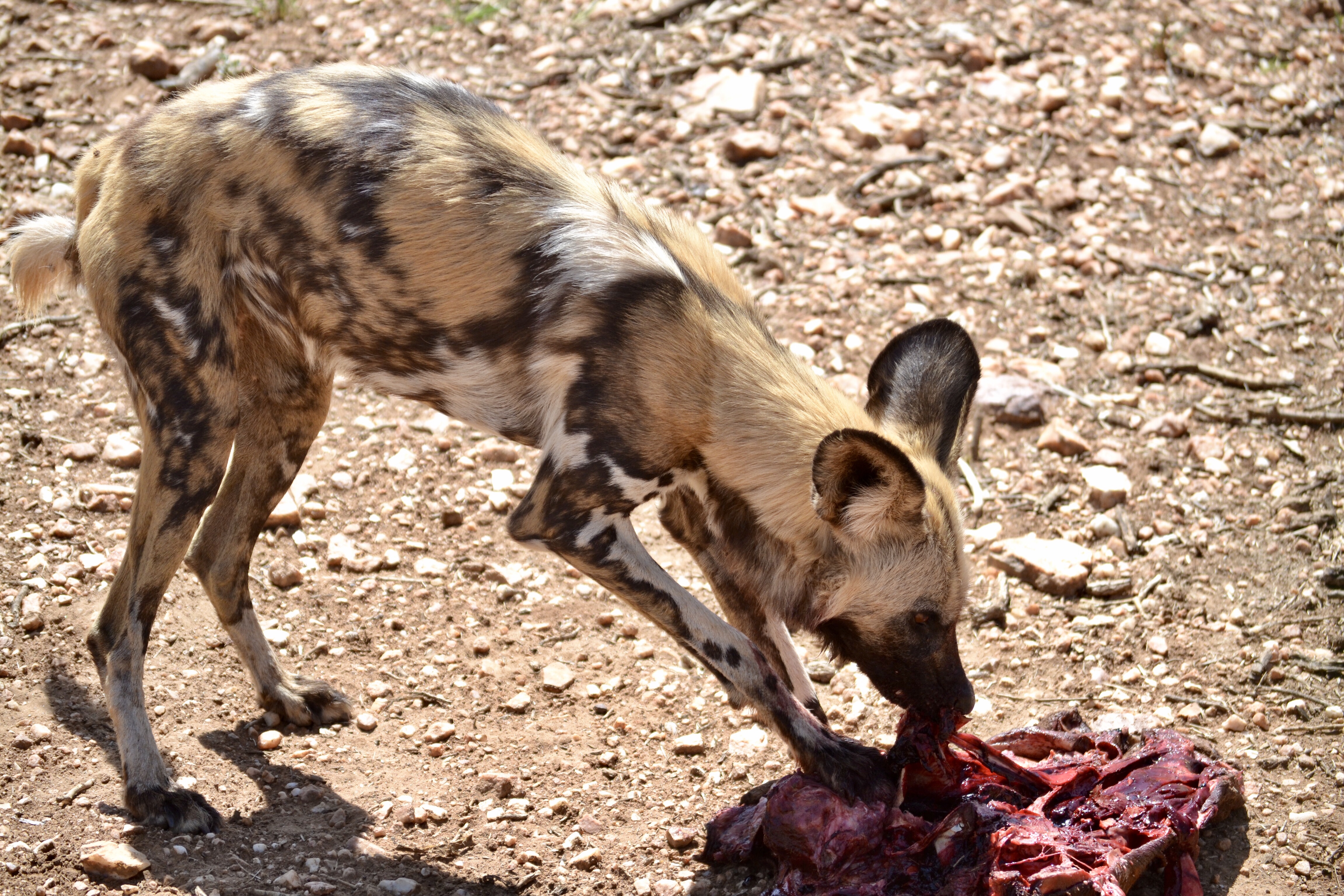
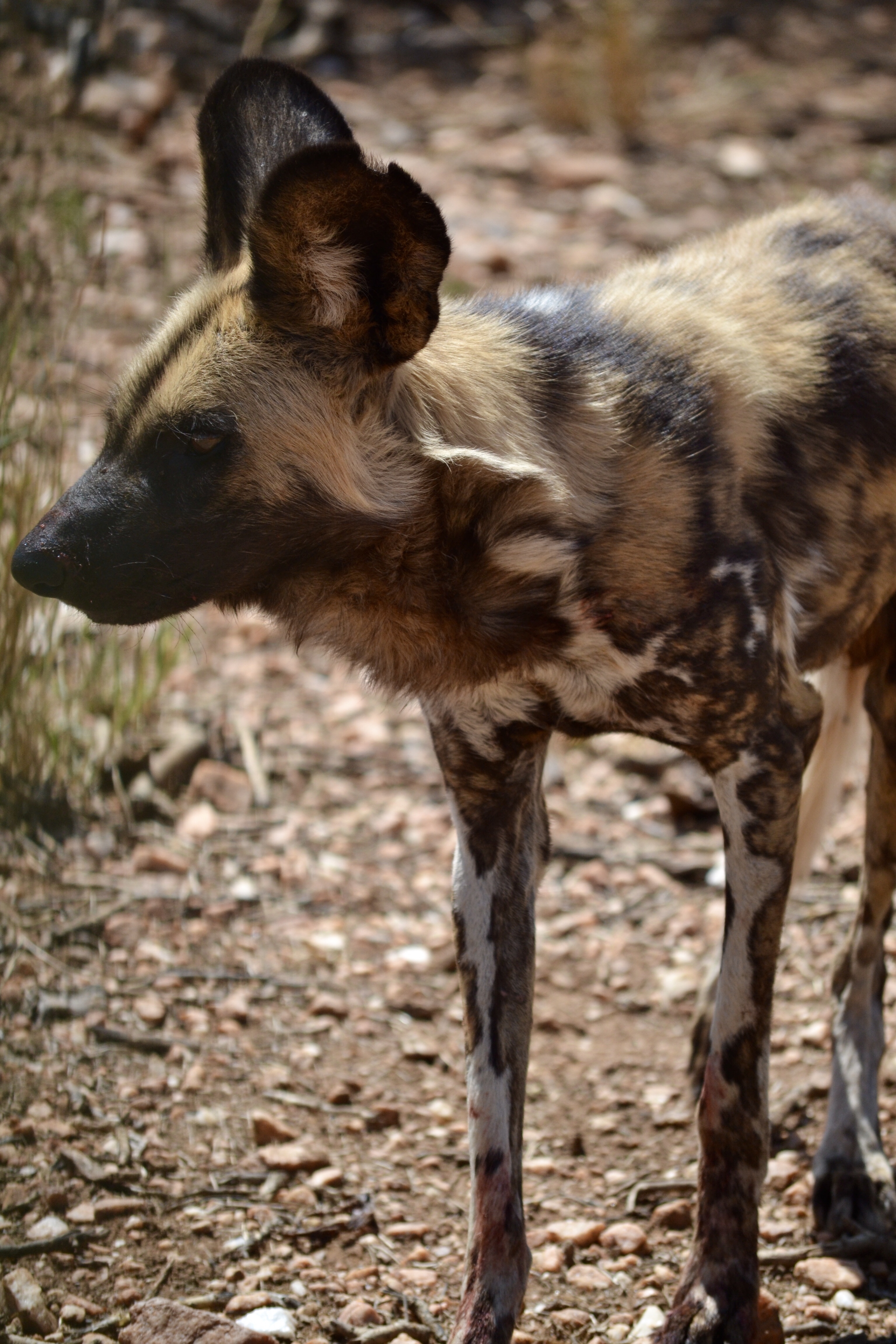
My last day at the farm part of Naankuse before I left for the research sites was definitely a highlight of my time there. I got to help with the carnivore feed which included feeding the African Wild Dogs (one of my favorite species)! The African Wild Dog (or Painted Dog) is one of the most endangered carnivores on the African continent, second only to the Ethiopian wolf which ranges through a much smaller area. The Wild Dog is so endangered due to conflict with farmers around Southern Africa. These pack animals are extremely efficient hunters and when presented with livestock herds, can cause mass deaths. Many hunters also dislike the manner in which the dogs kill their prey (disembowelment and eating while still alive) because it is seen as gruesome but in reality, the prey suffers from shock and blood loss so fast that they lose the sensation of pain very quickly. Other carnivores like lions and leopards kill their prey through strangulation which can take minutes for the animal to actually die. Namibia and other countries have made efforts to protect the last of their Wild Dogs by classifying them as a protected species. Plus, they are so beautiful! I hope to one day be lucky enough to see them in the wild.
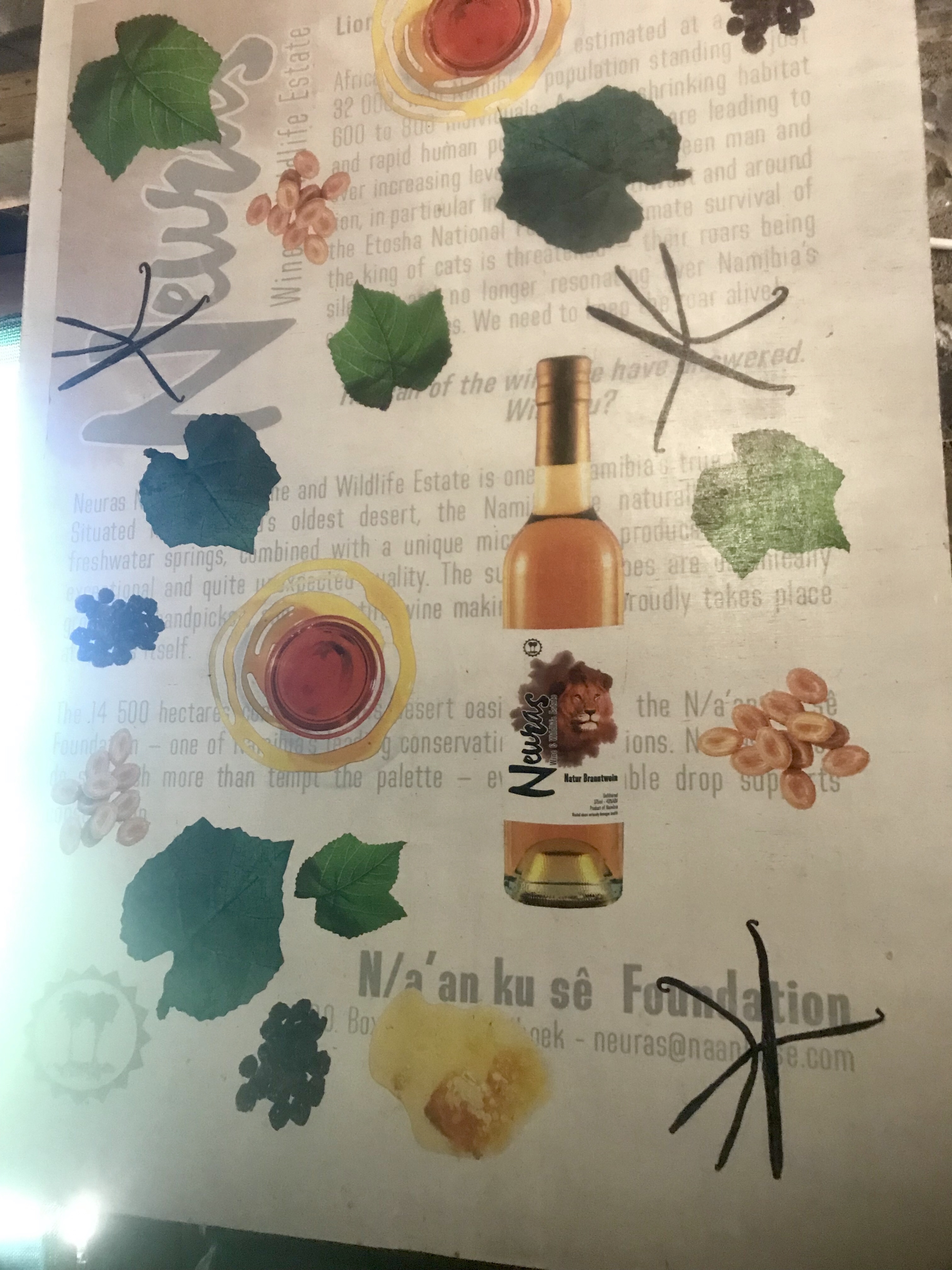
My first stop after the farm was Neuras Wine & Wildlife Estate. Originally, this piece of land was purchased because it was home to a leopard that was collared through a conflict situation. This leopard spent the rest of her life using this property as her home range and produced multiple cubs there. Now, the farm focuses on research regarding the Hartmann’s Mountain Zebra (did you know there are 4 species of zebra?) and the Black-backed Jackal. They also produced their own wine, rum, and brandy which they sell to local lodges. Being on the edge of the Namib Desert, Neuras is the second driest winery in the world. They are able to irrigate their vineyards through 5 natural springs that surface on the farm and produce enough water to sustain the entire property.
Unfortunately when we arrived on Saturday, I was feeling very ill and had a fever (not fun in the summer heat). I decided to take the next morning off to rest and hopefully kick the fever. My body was so tired that I slept for 13 hours straight! Luckily, I woke up feeling much better and ready to get back to work. The other volunteers had gone on a hike but when they returned, we watered the nursery and orchard. The plants they grow in these areas are native plants that they will use to combat the desertification that is occurring across Namibia. Each of the sites owned by Naankuse participate in this project which is also a part of the Queen’s Commonwealth Canopy Project. After lunch, we did a winery tour and wine tasting! Due to the high demand for the wine produced at Neuras, they only had two types left in stock! 
Monday morning half of us went on a hike to look for active jackal or zebra spots to put up camera traps for the research. We were told it was a little bit less than 10km (6.3 mile) hike and we would be picked up when we got to the fence that marked the border of Neuras. After a while, none of us knew exactly how far we had gone but we hadn’t found the fence yet so we kept going. When we finally made it to the fence, it didn’t seem like it could be a border fence because it was basically on the ground so we decided to keep going until we found a more promising fence. We made it there after 4ish hours of hiking and called our ride to pick us up. Only later did we find out that we actually hiked about 14km and the first fence we had found was the correct fence all along. We all had a great time though and got to enjoy beautiful scenery. 

After lunch, we helped butcher some animals to make food for the 7 cheetahs that live in an enclosure on Neuras. These cheetahs were all abandoned or orphaned as cubs and are now too habituated to people to be released. We get the opportunity to feed them 6 days a week at the closest distance you would want to be from a hungry cheetah! 
Tuesday morning we started with another hike to collect memory cards from the camera traps and possibly move them if we found better locations. Luckily, we had the staff with us this time so we only walked the correct distance (8km). While we were hiking, we got to see a large male kudu running up the side of a mountain. You wouldn’t believe the agility of these animals on such unstable terrain. We all tripped over tiny rocks and this huge antelope just scaled the mountain with little effort. 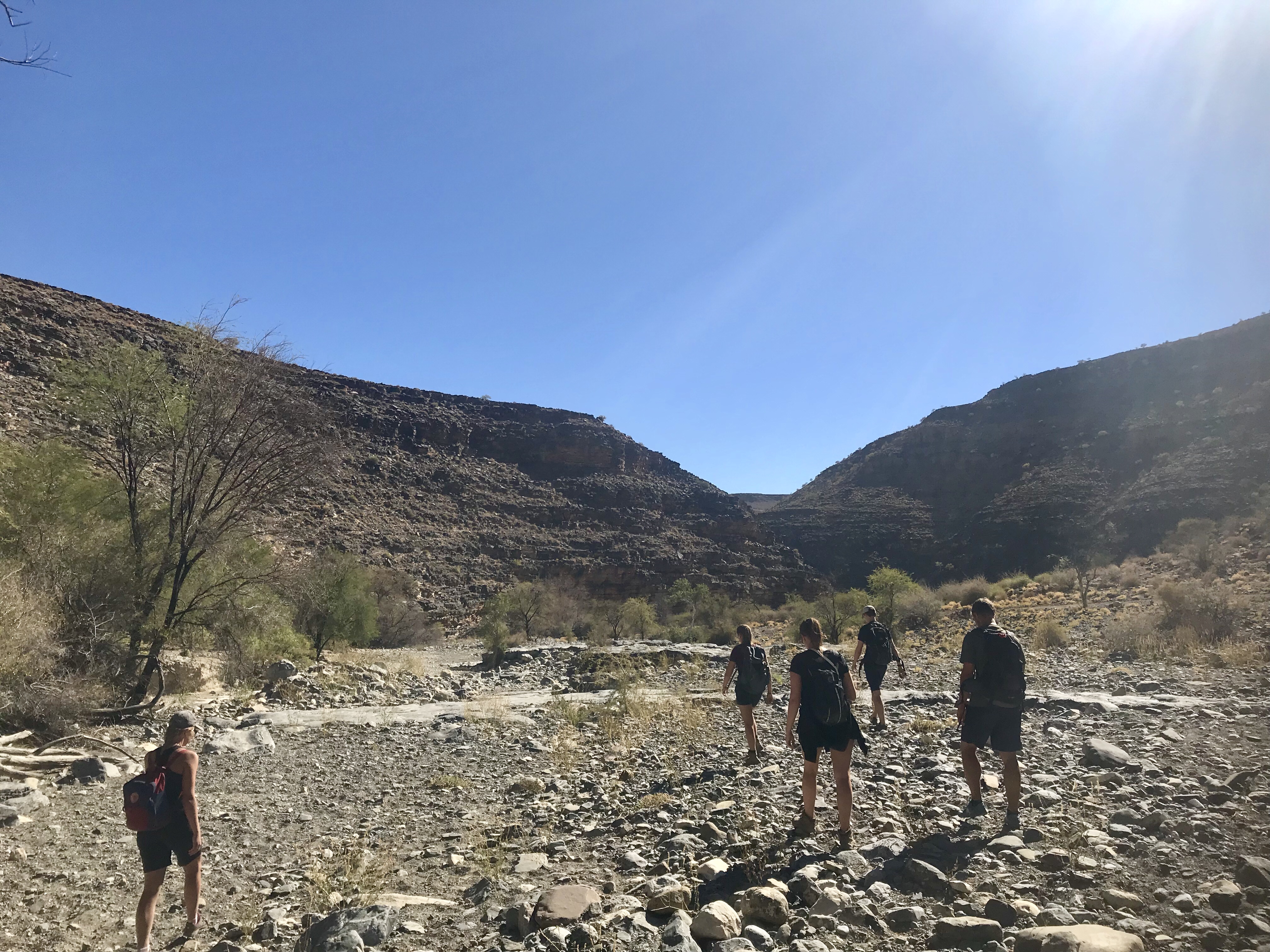
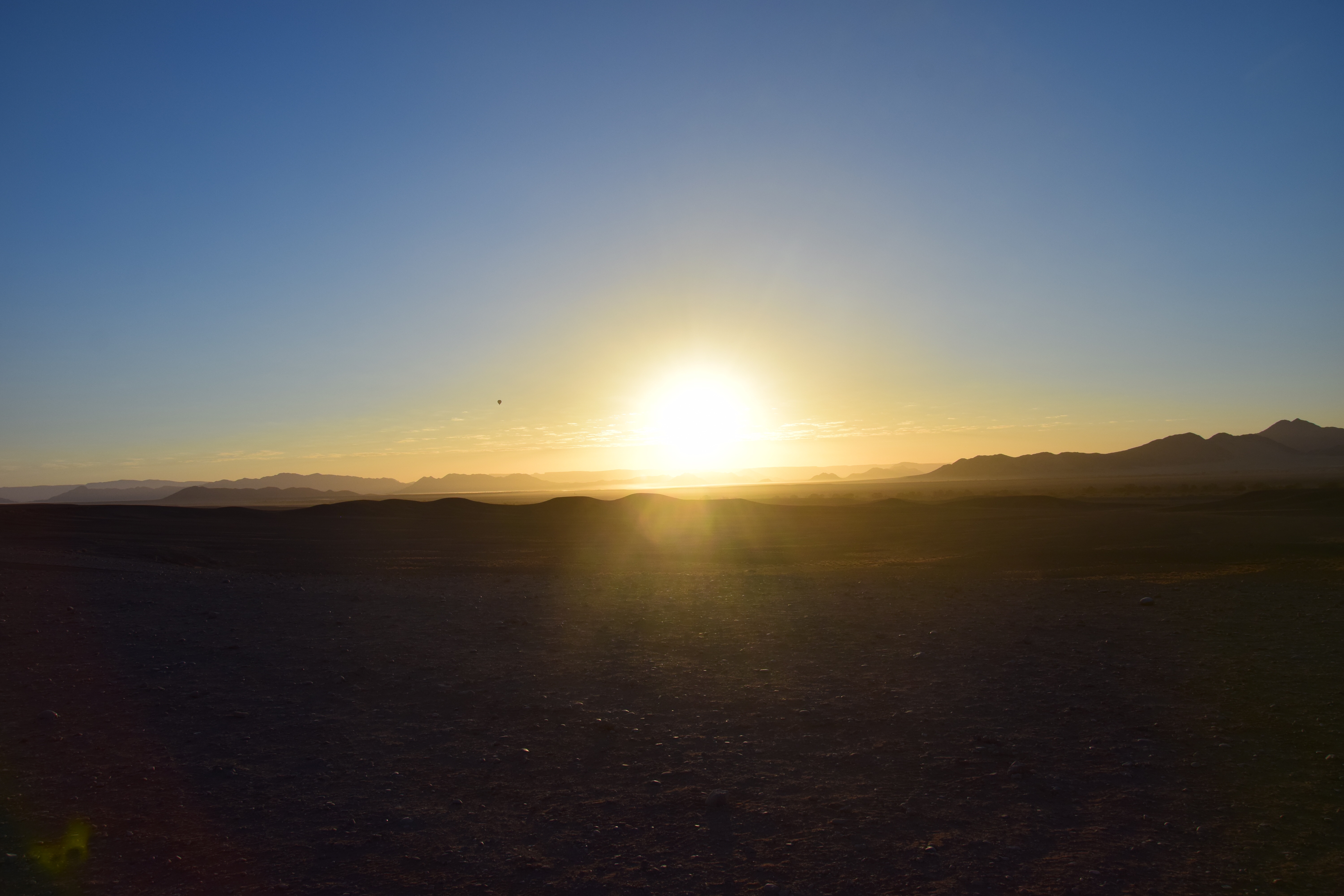
Wednesday was an easy day because most of the group went to Sossusvlei (the sand dunes). Those of us that stayed behind got to sleep in a bit and kind of decide what we wanted to do for the day. We started the morning by walking around the farm and looking for the family of meerkats. The research team is working on mapping their home range so we needed to find active dens and feeding sites and mark them on the GPS. Once we had covered the property, we watered the nursery and orchard again. After lunch, we sorted the rest of the camera trap images and enjoyed some down time by the pool. Once the others returned from the dunes, we all went out for a sundowner on the top of a mountain before dinner. 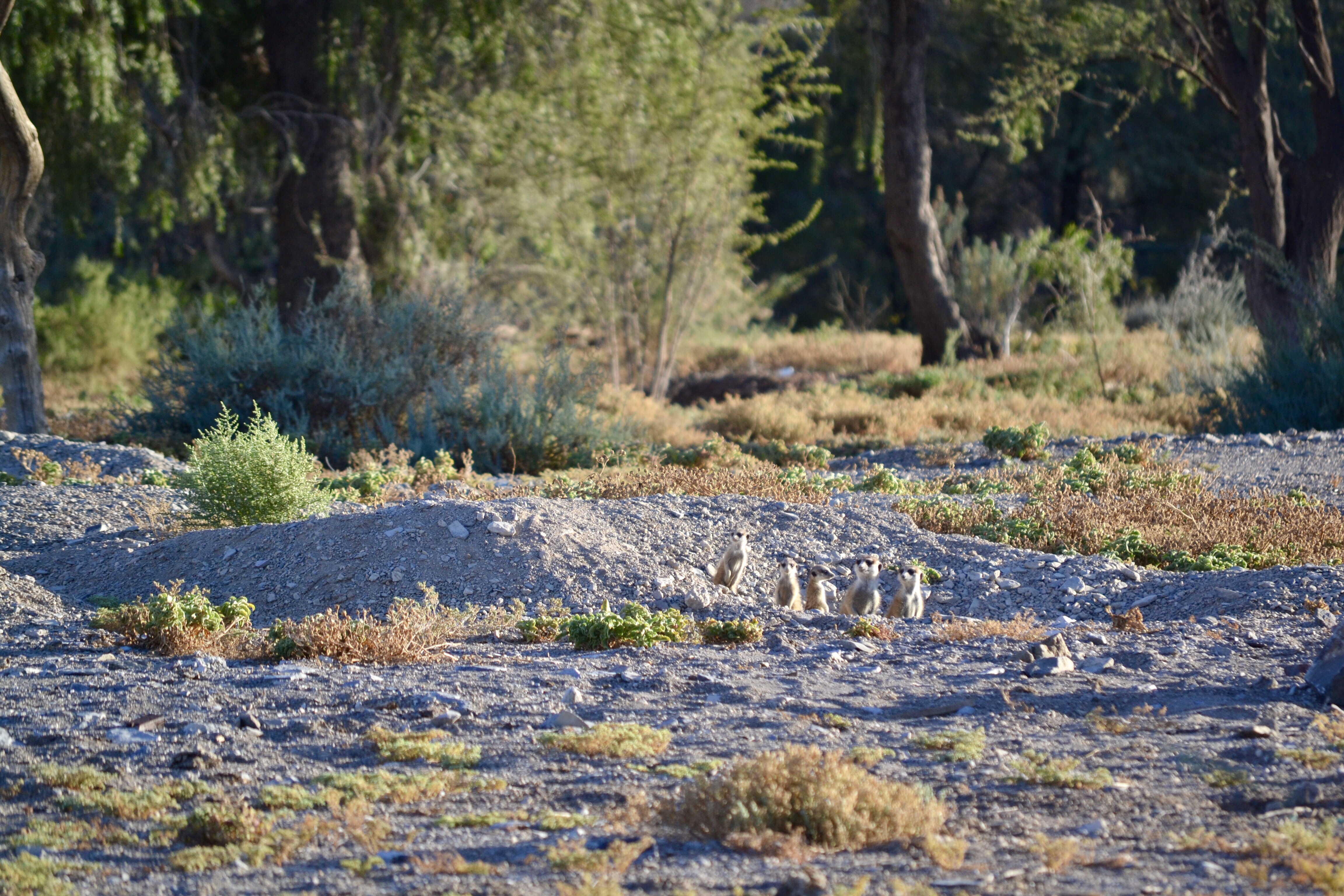
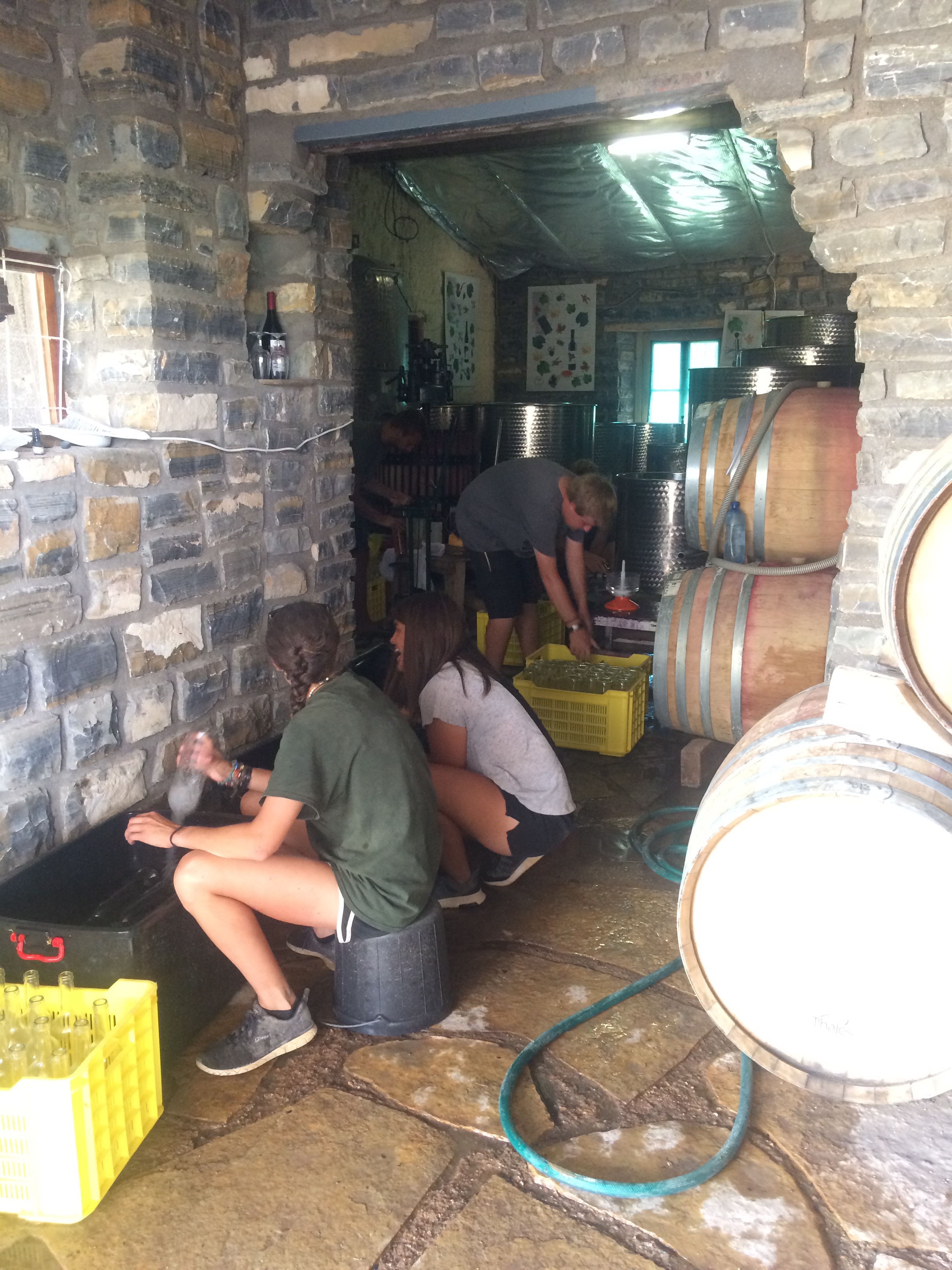
Thursday was our last day of work for the week. In the morning, we all worked on demolishing an old house on the property that isn’t liveable anymore. We were all gray by the end of the morning from all the dust from the rubble but we were able to take down two walls and remove a lot of rubble so the foundation could be taken out. After lunch, we split into two groups and my group was put in the wine cellar bottling 130 bottles of their rosé wine from this years harvest! We got to try a little bit of the wine and it was very good! I’m sure these bottles will be gone fast. 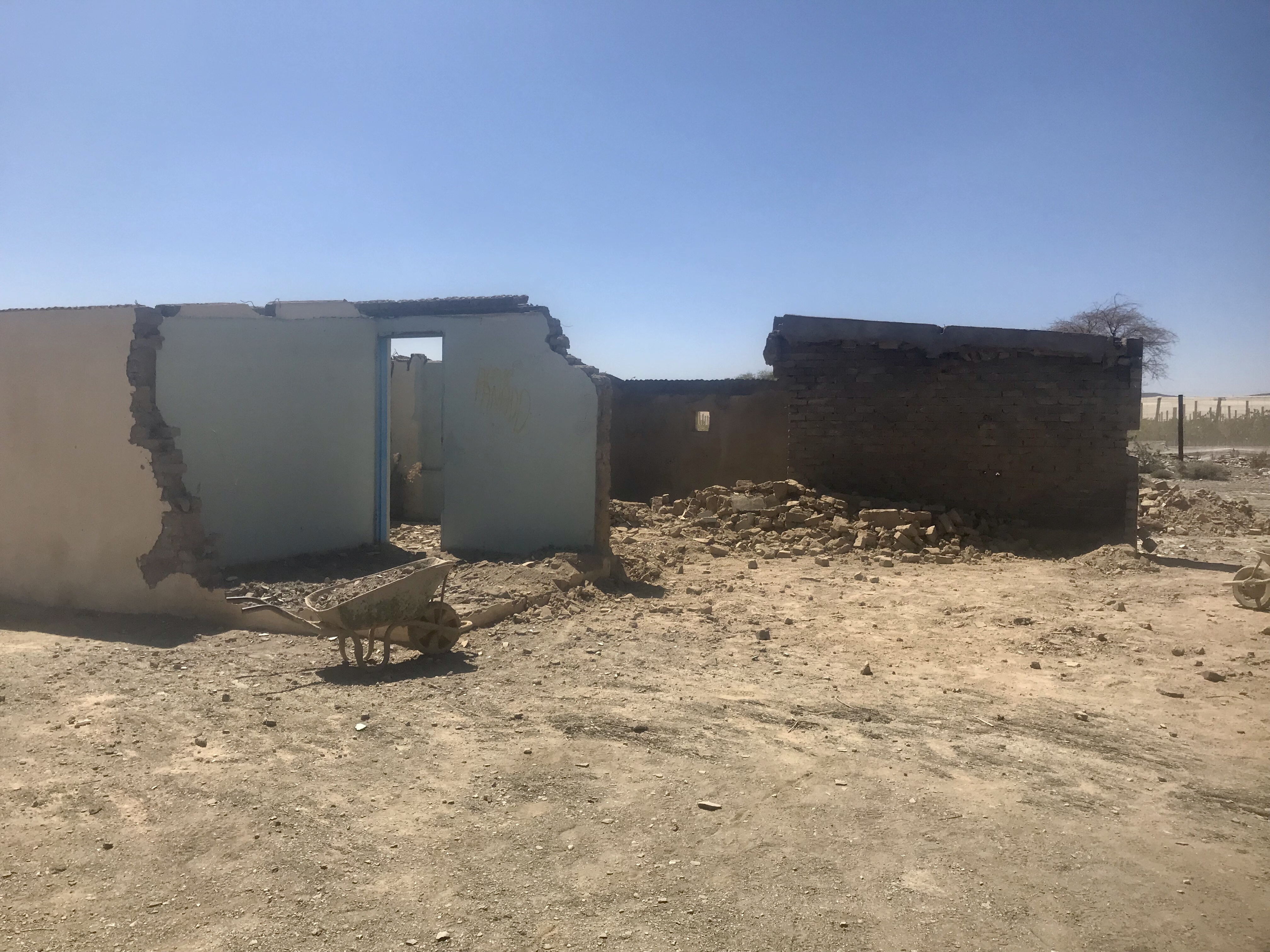
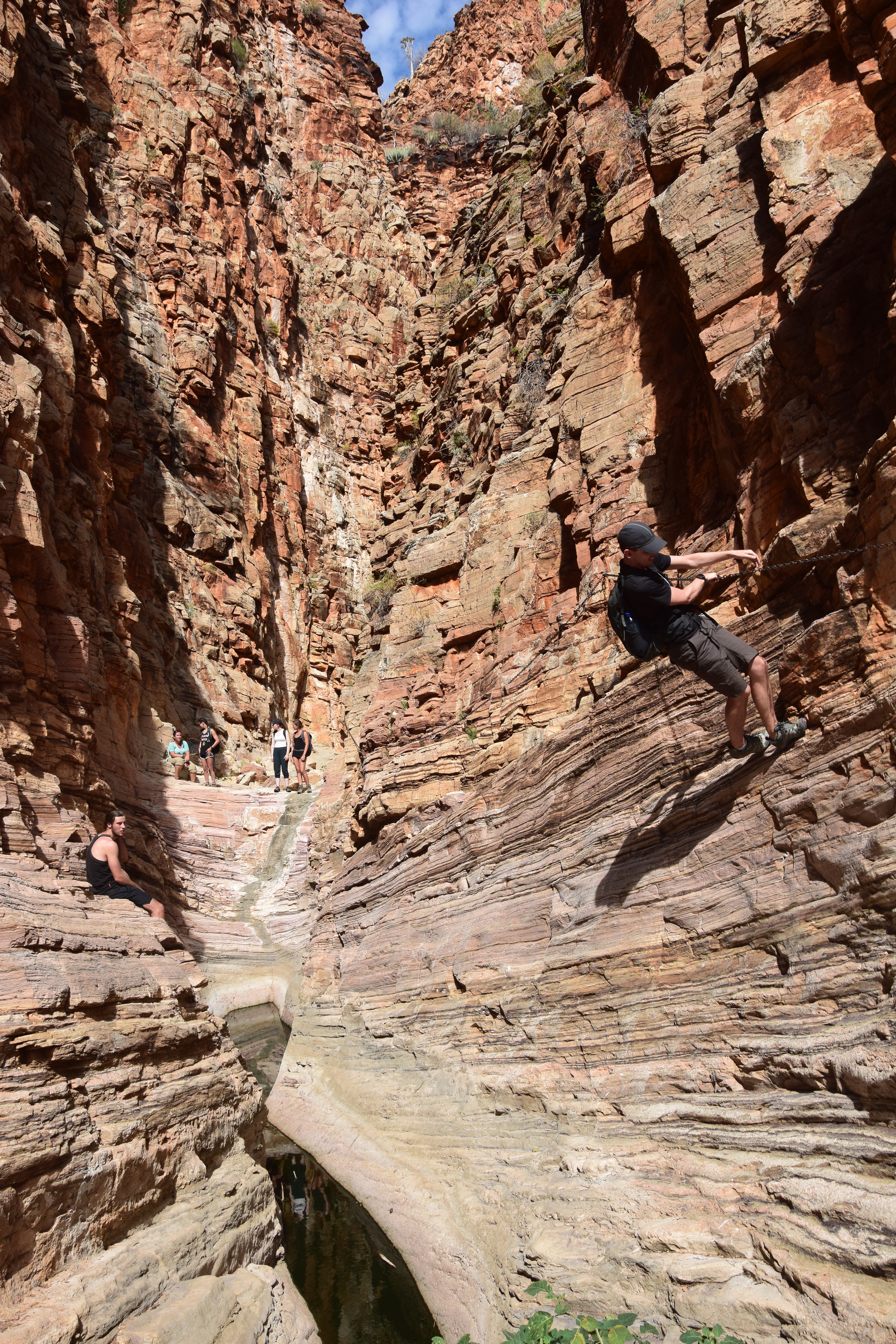
Friday we all went on a hike in the Naukluft Mountains for the day. The first part of the hike was straight up the mountain for about 3km. As we were going up, the sun was rising and we had a beautiful view below us. Once we reached the top, the remainder of the hike (7km) was through a canyon. At one point, we had to hold on to chains in the rocks while climbing across the side with some very dirty water below us. Once we finished, we enjoyed a nice lunch at the lodge before we started the second part of the hike. We hiked another 2km each way to some natural springs that we could swim in in the mountains. We were all pretty tired by this point but the springs were well worth it. When we got back to Neuras, we enjoyed a braai and party to celebrate our last night. The staff were so thankful for the work we had done that they gave us 6 bottles of the rosé wine to enjoy for the night! 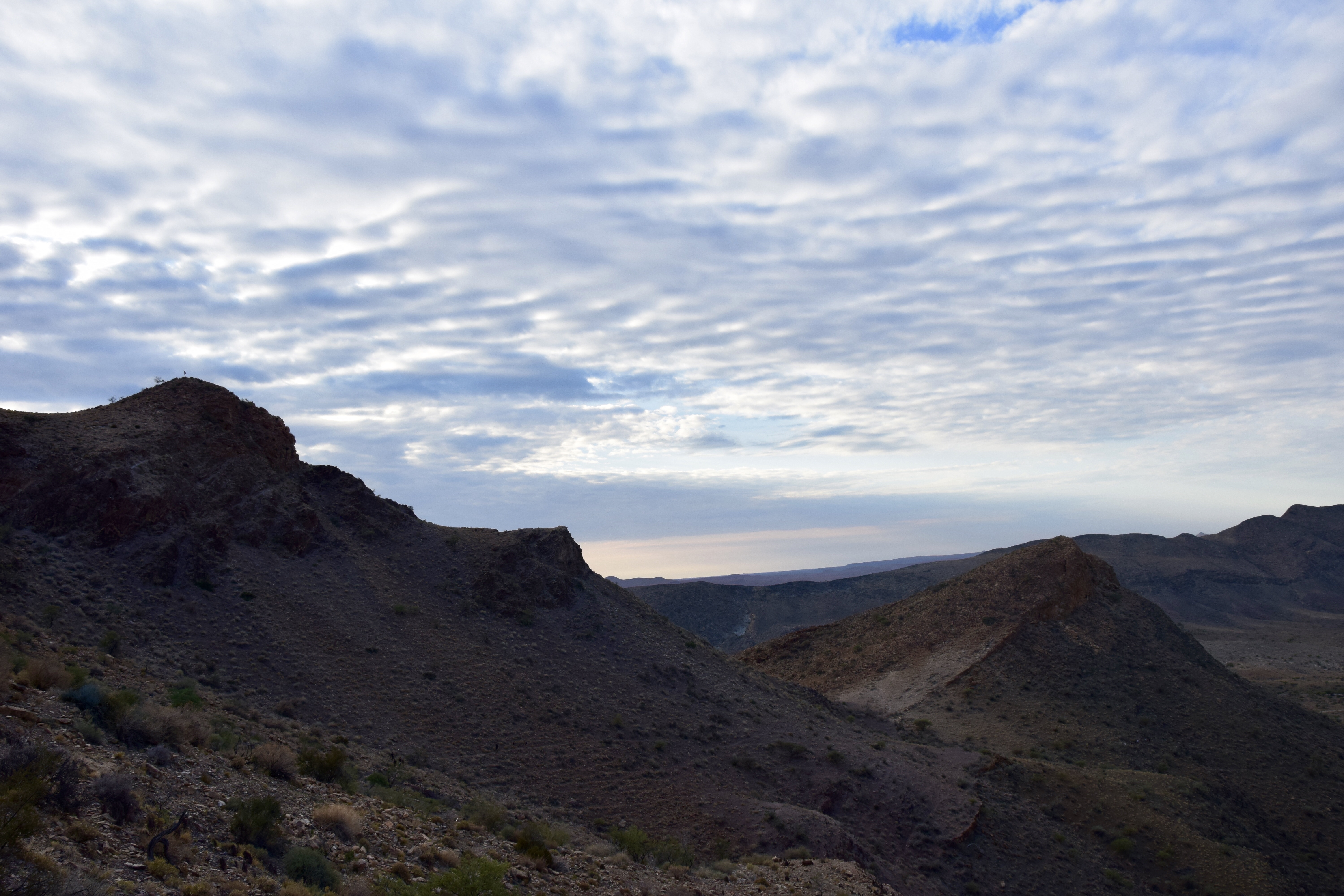
I had a great week at Neuras and I am really going to miss the group of volunteers that were there with me. Next post will be about the other research site in the middle of the desert!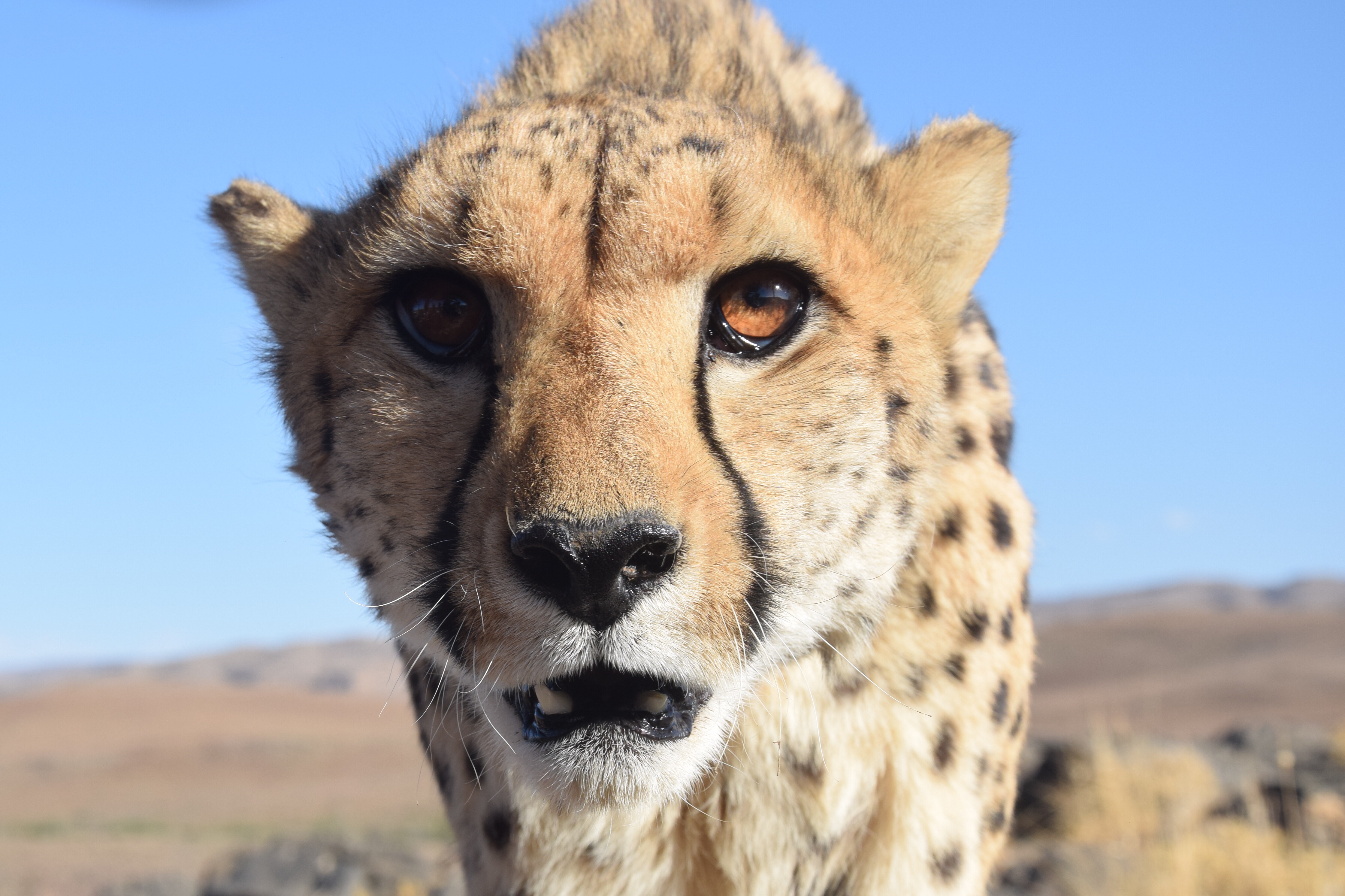


 Wandering Wildlife Vet
Leave a comment