
Welcome to my International Certificate Project! Throughout my externship at the Lilongwe Wildlife Center, I will be posting short, educational posts about common aspects and practices in veterinary medicine. They will focus on issues and procedures done at the center in order to care for their patients. Each post will explore the challenges of working with wildlife, challenges associated with working in a resource limited area or country, and the differences between practices here in Malawi and in the US. Please use the “Medical Terminology Dictionary” at the end of each post to learn a whole new vocabulary used in the medical field. Ask any questions you have in the comments and I will do my best to answer them! This first post is a Case Report on an animal that is currently going through the process of joining a troop here at Lilongwe. Thank you to Torie Smith, integration manager, for most of the information about this case!
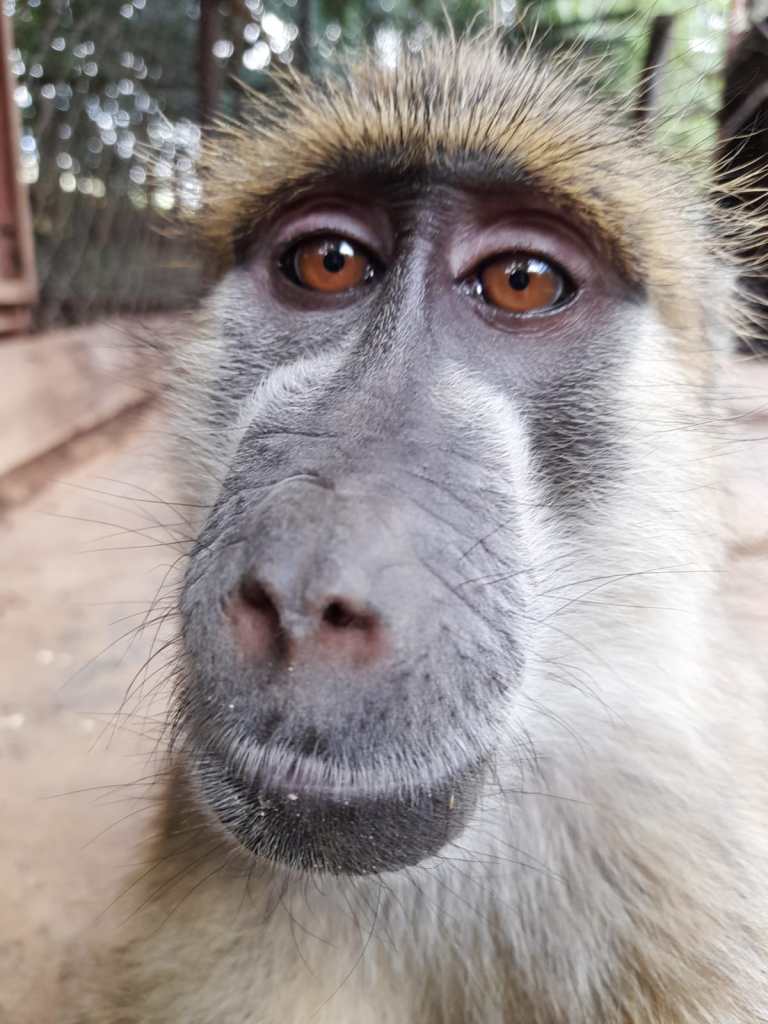
Potato is a juvenile yellow baboon who has brought to Lilongwe Wildlife Center by the Department of National Parks and Wildlife (DNPW). DNPW is responsible for managing and handling all wildlife cases that come through the country. Lilongwe Wildlife Trust has a very good working relationship with DNPW. They commonly contact the Trust when they have an animal that needs medical attention and any primate. Primates are always unique cases because of the complex social structures necessary for natural behaviors and survival. For this reason, primates typically spend 1-5 years at the center going through the entire rehabilitation process to reach the point of release. Other species that are commonly brought into the Center are tortoises and Nile monitors. If these animals are healthy, they are just held at the center until their court case is closed because the animals themselves are evidence and they have to be presented at court. In contrast to wildlife, all domestic animals are handled by the Lilongwe Society for the Prevention of Cruelty to Animals (LSPCA). Lilongwe Wildlife Center also works closely with the LSPCA because they have X-ray and ultrasound on site that the Center can use when needed.
In the US, wildlife issues are commonly handled by state agencies. This varies drastically by state so the following information will be aimed at Georgia since I am most familiar with their policies. Native wildlife is commonly handled by the Department of Natural Resources. Under Georgia law, native wildlife is not permitted to be held as pets. Some permits or licenses are given for the taking (hunting) of nuisance or overpopulated species and for rehabilitators. Some states also have a Department of Fish & Wildlife which handles wildlife cases. At a national level, the US Department of Fish & Wildlife manages most issues related to wildlife, native and exotic. Most domestic animal cases are handled by local law enforcement and Animal Control officers. Some livestock cases may go through the Department of Agriculture. As you can see, there is a lot more oversight to these issues in the US than here in Malawi. However, Malawi is a much smaller country with less local governmental influence on these issues.
Potato was an ex-pet which can immediately affect his releasability. Older primates that have been kept as pets for most of their life tend to develop abnormal behaviors, nutritional issues, medical problems, and aversion to change. It is important to identify these behaviors and try to reduce or eliminate them before attempting to introduce the animal into a troop. Some behaviors could cause the animal to be rejected by a troop or unable to perform natural behaviors that would classify them as unreleasable. In Potato’s case, he had not developed any abnormal behaviors, but he is easily frightened by animals that are larger than him. This is likely due to a lack of exposure to other primates during his critical developmental stages of infancy. For this reason, integration into a troop will need to be slower for him so that he is not frightened by the larger males and females that will make up the group. Potato is also afraid of change. He is reluctant to move into different enclosures or even areas within his enclosure if he has to pass through a slide (door that can open and close from the outside, so staff doesn’t have to enter the enclosure). This aversion to new environments is commonly seen with ex-pets who lived in the same environment for their entire life. Pets, especially primates, are sometimes kept in a garden on a chain or rope where they have limited exposure to new environments or objects, so they are weary of change later in life.
Releasability is a very important component of intake for animals at the center. The main objection of every rehabilitation process is to release that animal. However, you can’t just release any animal back into the wild, especially if it is an ex-pet. The factors that are considered when determining an animal’s releasability are listed below.
- Is the animal medically fit to release and survive in the wild?
If an animal is going to need long-term medication, that animal is not a good candidate for release because you can’t realistically administer medication to a wild animal once it is back in the wild. They also must be free from any chronic conditions or disabilities. Both issues could decrease the animal’s chances of survival or acceptance into a troop.
- Is the animal physically fit to return to its natural habitat?
As I stated above, an animal must be able to perform natural behaviors to be released. This also includes body condition. Poor body condition, whether it be underweight or overweight, means that the animal may have underlying issues that will affect its ability to perform natural behaviors. For primates, they must be able to climb to evade predators. If they cannot, they are not releasable.
- Does the animal have an appropriate aversion to predators?
Nature is full of danger and an animal needs to be able to recognize that and respond appropriately to maximize its chances of survival. Unfortunately for ex-pets, this also includes a natural fear of people. This doesn’t necessarily mean immediately running away anytime a person is seen but they shouldn’t desire to interact with people and should move away as a person approaches them. For primates, they should sleep above the ground. Baboons and vervet monkeys (the two most common species in Malawi and at the center) sleep in trees because sleeping on the ground leaves them extremely vulnerable to predators.
- Can the animal acquire its own food and is it an appropriate food source?
An animal that is being force fed or has to be hand fed is not a candidate for release. This criterion can change as an animal’s health improves or through learning but if they do not improve, then they will not be released. For primates, foraging for food occupies a large amount of their time in the wild. Releasable animals should show appropriate foraging behaviors like using their fingers to pull things out of logs.
- Is the animal interacting appropriate with other members of its species?
This is especially important for primates since they are social animals. A primate that is isolating itself from the troop is not a good candidate for release because that animal will be prone to predation if it is on its own. Social grooming is also an important behavior in primates. Individuals should allow others to groom them and groom others back in an appropriate way before being released.
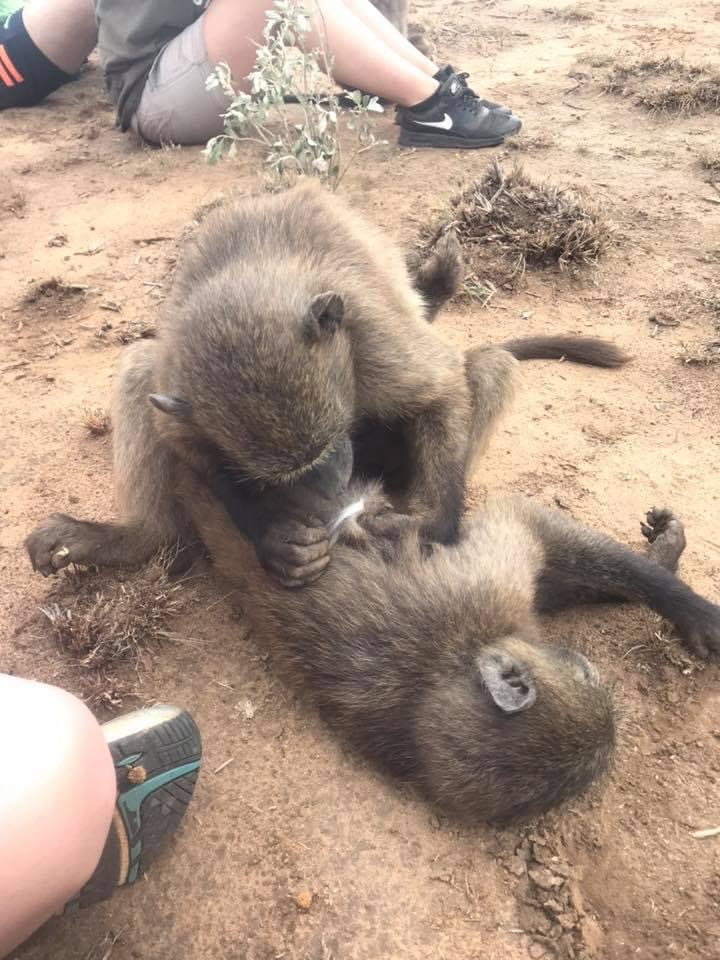
Medical intervention does not immediately eliminate an animal from being releasable if that treatment is short-term, and the issue will not have long-term effects. In the case of primates, their housing location is also important when it comes to medications. The most common method of medicating primates is through a food item. If a primate is housed in a separate enclosure where the rest of the troop can see them, this could create conflict when the animal joins the troop because they may think that animal was receiving special treatment in the form of treats. This could lead to bullying within the troop and potential for additional injuries. Another aspect that must be considered if the animal must be separated from its troop to receive care is the impact on the social dynamic of that troop. Usually, removing a low ranking individual or younger individual will not be a problem but removing a dominant male or female for a long period of time could result in them not being accepted back into their troop.
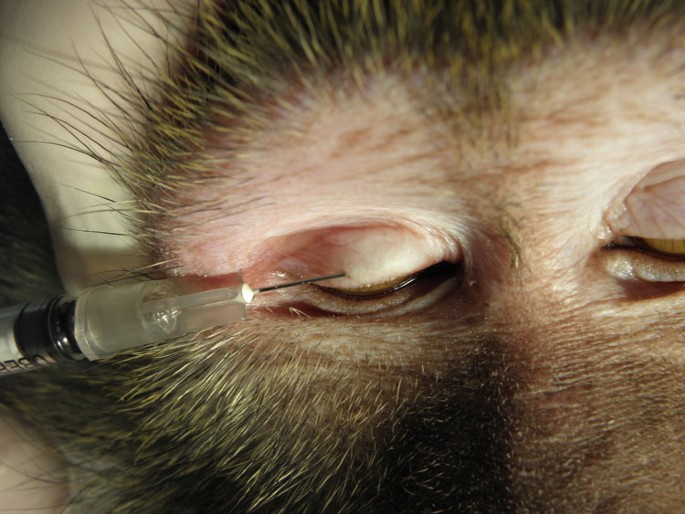
Potato was healthy when he arrived at the center so he was put into the quarantine section where he would spend 6 weeks. They perform two quarantine exams on each animal that is brought in to test for infectious diseases, mostly tuberculosis. Tuberculosis testing in primates is done using a comparative skin test in the eyelids. It is very similar to the human skin test, but it is a comparative reaction instead of just the singular spot. A comparison is made between avian TB, which is usually noninfectious and is found ubiquitously in the soil, so most animals are exposed to it, and bovine TB, which is the highly contagious form commonly transmitted between animals. If the bovine reaction is larger than the avian reaction, that animal is deemed positive, and a blood sample and chest X-rays will be taken to determine a true positive. The reason the test is done in the eyelids is because this is an area that has very little hair and is easy to see without having to sedate the animal. The reaction is read 24, 48, and 72 hours after placing the injections under the skin. Potato was negative on both exams!
The next step for Potato was to be integrated into a troop. This process can take anywhere from 2 months-1 year depending on the individual. Larger males and females can take longer because they will likely be dominant in the new troop. When deciding what troop Potato would be a best fit for, troop dynamics and demographics were considered. If a troop recently had a new baby or another newly integrated member, he should not be integrated into that one because that troop needs time to adjust to the new member and bond before considering an additional integration. Once Potato’s new troop was selected, he was moved into an enclosure that shared a fence with the troop but kept him separate as they got used to him. After a little bit of time in this area, one young female, Polly, was also put into his enclosure so that they could bond. Signs of a primate being accepted are being groomed by troop members (even through the fence), positive vocalizations from the troop and the individual, troop animals choosing to interact with the new addition through the fence and vice versa. Once the animal is released from the holding area into the troop, it is important to see that the new individual is moving with the troop, eating when the troop eats, and not isolating itself. Potato was accepted by Polly after a little bit of time together. Polly was already an accepted member of the troop so this bond will help encourage the rest of the troop to accept him when he is ready to join the troop!
Rehabilitation in the US utilizes very similar release criteria. However, we are almost never dealing with primates. Most of the animals that I have seen come through the Wildlife Department at UGA are turtles, raptors, songbirds, baby opossums, and sometimes small mammals. Almost none of these animals are social species so we can eliminate that criteria. I will describe some of the common issues and concerns we face with each of these animals.
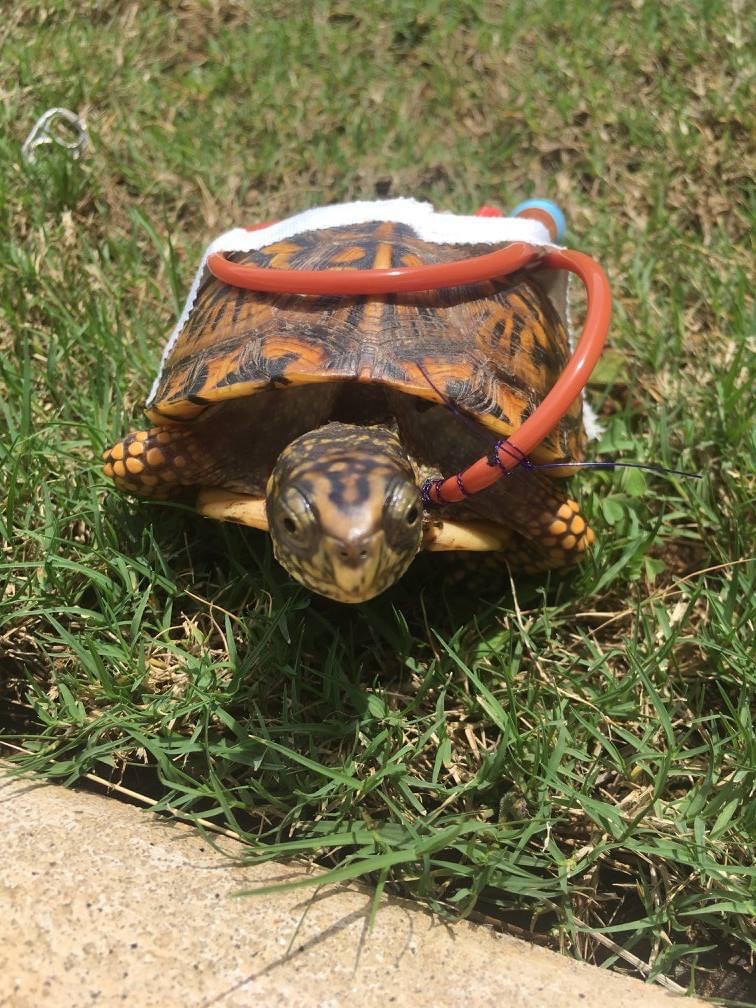
- Turtles: Most turtles present due to shell injuries. A turtle cannot live without its shell, so the extent of the injuries is a huge factor. Turtles heal incredibly well if the shell can be put back together. If a significant portion is missing, that is not repairable, and that animal cannot survive. Another concern with turtles is that they typically “hibernate” during the winter due to low external temperatures. If a turtle comes in close to winter, it is possible that that animal will have to remain in care throughout the winter because it cannot be released while it is cold.
- Raptors: With raptors (or birds of prey), the biggest concern is whether they will be able to acquire food. For hawks, this means they must have 2 working eyes otherwise they cannot accurately pinpoint the location of a prey item. Owls, on the other hand, will do fine with only one working eye. Since these are birds, they must be able to fly. This includes fractures to the wing, issues with the air sacs, and feather problems. If a bird cannot fly, it cannot perform natural behaviors and that animal should not be released.
- Songbirds: Similarly to raptors, these animals must be able to fly. Some birds acquire food while flying and it is how they evade predators. Migrating songbirds pose an issue if they come in close to when the species should be migrating. If a bird does not migrate, it throws off their entire natural rhythm and that animal will not recover.
- Baby opossums: As with all baby animals, baby opossums will need feeding every couple of hours for multiple weeks. Most of these young come in because their mom was hit by a car so the babies do not have any medical needs. For this reason, it is best for these animals to be transferred to a licensed rehabber as soon as possible. These rehabbers are better equipped to provide the necessary care to orphaned wildlife.
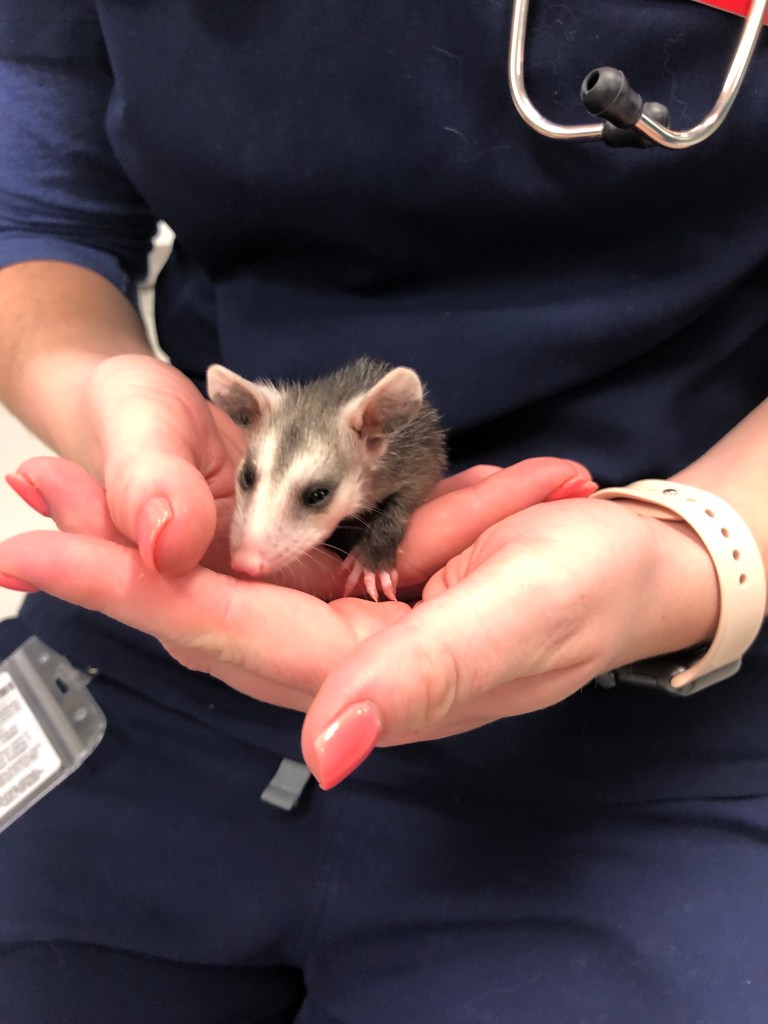
I hope you enjoyed learning about rehabilitation of wildlife and hearing Potato’s story! Please post any questions you have in the comments. Stay tuned for the next post on bloodwork!
Medical Terminology Dictionary
- Native wildlife: indigenous/endemic species
- A species that is found in a region or ecosystem as a result of natural processes, not human intervention
- Abnormal behaviors: stereotypical behaviors
- A repetitive, unchanging behavior that has no obvious goal, function, or benefit to the animal
- Examples: pacing, overgrooming/feather plucking
- New objects/environments: novel stimuli
- Acquiring food: foraging
- The act of gathering food from environmental resources
- Monkey: primate
- Primates are a class of mammal that includes prosimians (lemurs), monkeys, apes, and humans. Every monkey is a primate but not every primate is a monkey.
 Wandering Wildlife Vet
Leave a comment