
I am sorry that it has taken me so long to get my second post written! We have been extremely busy the past 2 weeks while we were completing the Wildlife Veterinary Course. Usually, this course would be for externs who cannot come for a long duration or animal care volunteers that just want to be exposed to wildlife medicine. For us, it was a more intensive program focused on lectures and labs relevant to working with wildlife. We also spent time in Kuti Wildlife Reserve and Liwonde National Park during this course and today was our first day off. This post might be long as I write about the past two weeks!
Tuesday 6/1
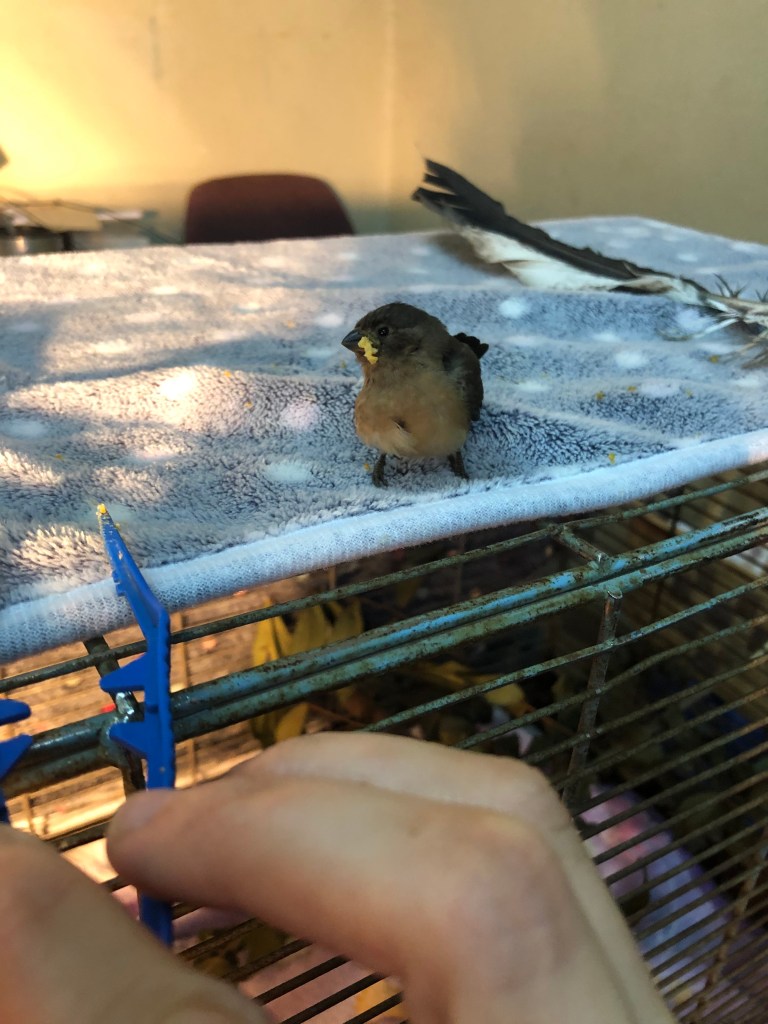
My first task of the day was preparing bottles for Frankie and Biscuit, the orphaned primates currently housed with their foster moms. Afterwards, my morning consisted of baby bird duty. The fledgling is flying better and is about ready to make a great escape! It is beginning to peck at its food on its own so we are hopefully it will be eating on its own soon. Once we see that it can fly properly and eat on its own, we will be able to release it! I was in charge of afternoon feeds for Lulu and Beans, the serval, Frankie and Biscuit, the owls, and the bushbaby.
Wednesday 6/2
I start this morning by administering medications to the chronic cases. It is a pleasure to become familiar with these animals as you spend more and more time with them. We do not interact with them closely (as they are wild animals) but you get to see their individual personalities even just by giving them a porridge ball with medication in it. After giving out the medication, we worked on writing a necropsy report from Yala’s postmortem exam the previous week. These reports can be used as evidence in neglect or abuse cases, crimes, or to provide owners with definitive diagnoses after euthanasia. In Yala’s case, this report will be put in her file to document the finding of a splenic mass as justification for euthanasia.
Thursday 6/3
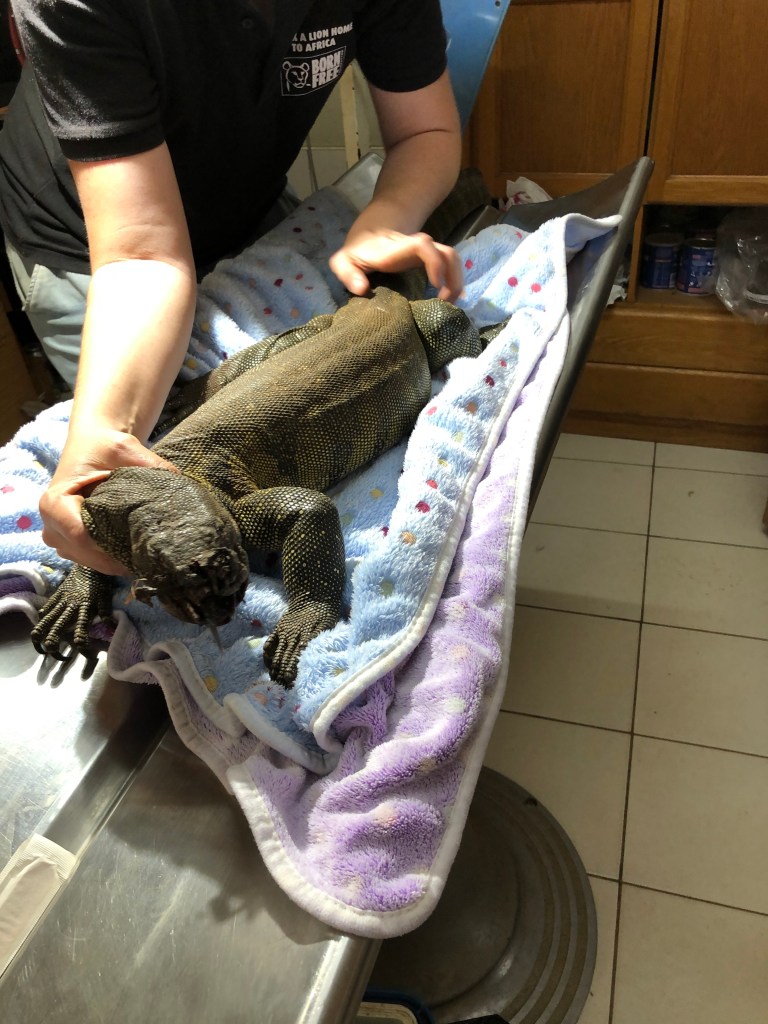
My first task of the day was preparing bottles for Frankie and Biscuit. Then, I prepared and fed Lulu and Beans, the African Grey Parrots, and the kite, a large bird of prey similar to a hawk. A new volunteer arrived yesterday so I helped show her how we clean the orphan care area and how to do the feedings for the resident animals. Around 11 am, Charlotte was called out for an injured Nile monitor that was found in a maize field. Based on the photo she was sent, the monitor had some evidence of head trauma. The monitor was in Bunda, a town about an hour away where the veterinary school of Malawi is located. When we arrived, some staff pointed us to where the monitor was hiding in the grass. Nile monitors can be very aggressive lizards, weigh up to 20 pounds, and be 6 feet long. They have sharp, pointed teeth and extremely dirty mouths. They use their tails like a whip which can hit you with a lot of force. For all these reasons, Charlotte used capture gloves and a net to restrain the animal and get it into a crate for transport.
When we returned to the center, the monitor was sedated for examination. Unfortunately when we removed it from the carrier, we were able to see that the head trauma was far more extensive than we had first believed. The monitor had suffered blunt force trauma to the head that resulted in fracture of his jaw. The injury appeared to be a few days old so there was significant infection present that would not allow for surgical correction of the fracture. These injuries would prevent this animal from ever being able to acquire food, so he was euthanized. Upon postmortem exam, it was evident that he hadn’t eaten in a few days but was relatively healthy. He most likely would have died from starvation before the infection if he had remained in the wild. Photo below may be disturbing for some readers as it shows the infected head of the monitor.
Friday 6/4
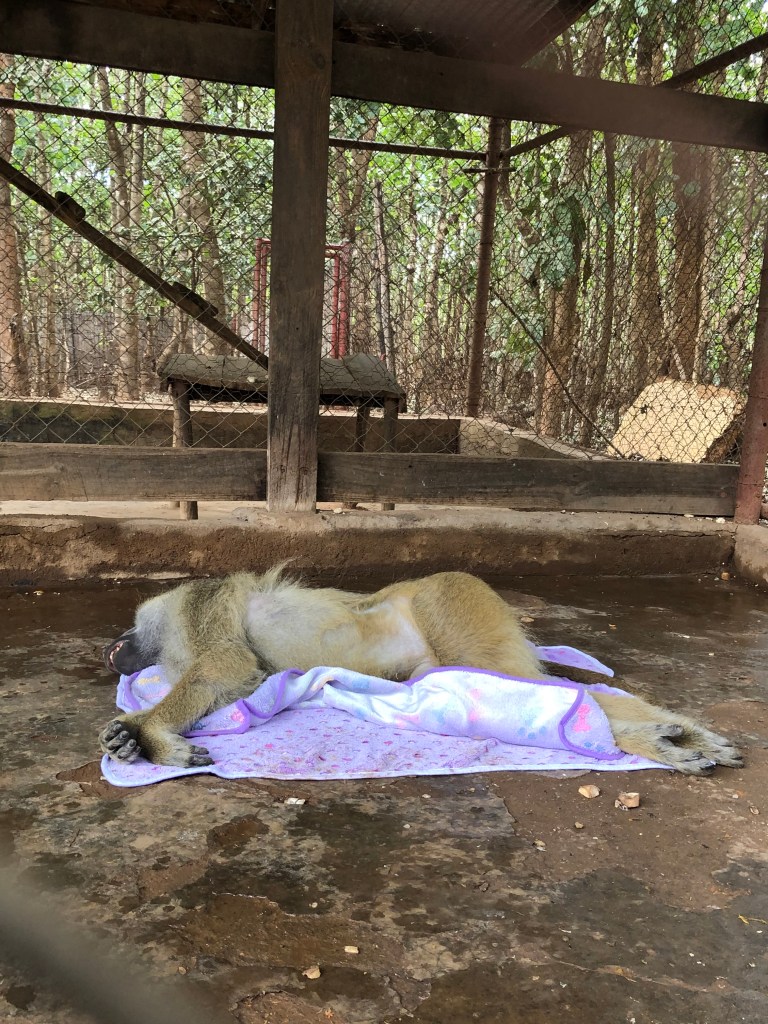
This morning we performed a quarantine exam on Sunny. Sunny is a LARGE male baboon that was brought into the center with a bullet wound. Charlotte was able to remove the bullet and it didn’t appear to cause any internal damage or broken bones. This was Sunny’s second quarantine exam so after his TB test results are read, he can begin the integration process into a troop. Since he is a large male, his integration will likely take longer than if he was a small male or younger. Due to his size and his fear of people, Charlotte elected to dart him for safety. When she darted him, he chose to climb onto a higher perch where he fell asleep. This is always a risk with darting them because they can fall from these perches when the anesthesia takes effect. Luckily, Sunny was not injured when he fell. During his exam, we checked on the bullet wound and it was completely healed and there was very little evidence that it had ever been there.

I spent the afternoon working on developing an outline and plan for the posts I will be making for my project. I hope to post one a week, but we will see how busy we are as time goes on. Some of the posts also require that we do certain tasks before that date but wildlife medicine is unpredictable so they may come sporadically!
Saturday 6/5
Saturdays and Sundays are usually our days off but unfortunately, one of the staff was sick so we needed to split up the tasks for the weekend. I worked Saturday and took Sunday off with the new volunteer doing all of the feedings throughout the day and taking care of the baby bird. It was a very busy day especially because none of the animals were cooperating. Working with wildlife is never the same day-to-day and sometimes they aren’t in a good mood either.
For dinner, we decided to go out to eat. We were recommended a Mexican restaurant called La Cantina. I was extremely skeptical of Mexican food in Africa, but it turned out to be really good! The owner was trained as a chef in Mexico so it was just about as close to authentic as you could get with the food available here. Plus, a margarita or two hit the spot after a long day and week.
Monday 6/7
After administering the morning medications, we helped Gideon with some enrichment for the primates. Our goal for these enrichment items was to stimulate natural foraging behaviors. We made “leaf sandwiches” out of leaves, peanut butter, honey, rice, and peanuts. These are designed to make the primates rip them apart to get to the treats in between the leaves. We also made treat logs for the larger baboons. These are logs with holes drilled in them that we filled with honey, peanut butter, peanuts, and rice. We then covered each hole with a slice of banana. When given to the baboons, they should use their fingers to pull the banana and other treats out of each individual hole. Some baboons try to use their mouth to lick and bite the treats out of the holes but that is not natural behavior so the hope is they will eventually start using their fingers. We had many of the wild vervets around us trying to steal a treat or two from us while we were making them.

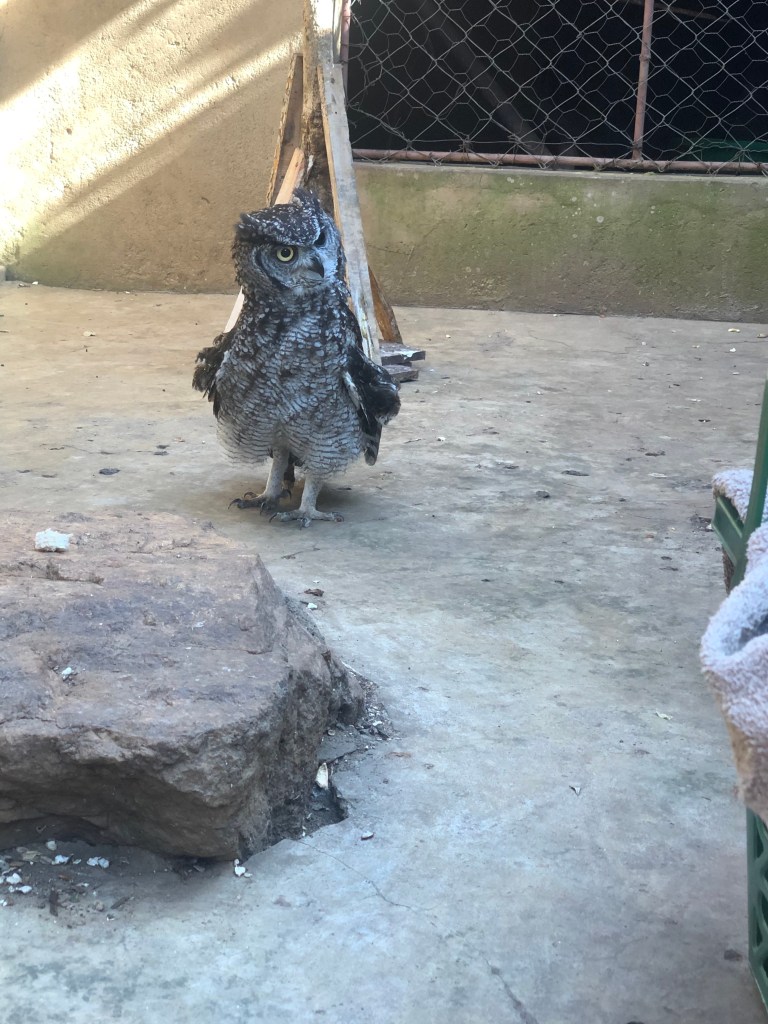
After lunch, we started the Wildlife Veterinary Course with a lecture on primate medicine. We discussed husbandry, common species, classification of primates, common conditions and how to treat them. This was a great refresher from our Zoo Medicine course last spring and full of new information related to common issues seen here in Malawi versus in a zoo setting. We ended the day by practicing visual exams on Potato, the baboon, and the resident kite. Visual exams are extremely important with wildlife because handling these animals can cause them extreme stress. Also, some wildlife is too dangerous to put your hands on them. You can learn so much about an animal’s health status by just looking at them and watching them behave.
Tuesday 6/8
Today was a busy day as we were preparing to do a community outreach clinic tomorrow at a local village outside of the Kuti Wildlife Reserve. These clinics are part of the One Health initiative through the trust to continue to help the local communities and create a good relationship between the people of Malawi and the center so that they are more likely to report injured wildlife. One of the volunteers is also doing a thesis on tick-borne diseases and the transmission between livestock, wildlife in the reserve, and the farmers because many of the farmers graze their animals in the reserve during the dry season. To prepare, we created a document with doses, indications, and contraindications for each drug that would be used during the clinic. Our main goal was to deworm the livestock, take blood samples, collect any ticks, and vaccinate the dogs for rabies. We would also administer antibiotics to any animal that was showing signs of respiratory infection.
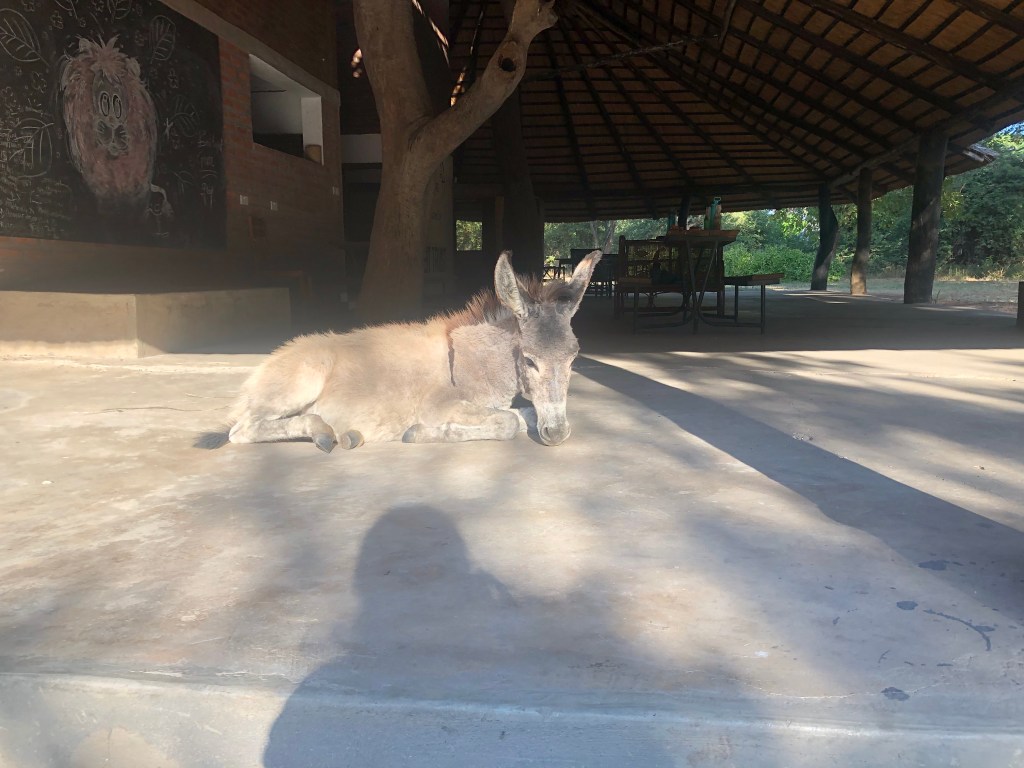
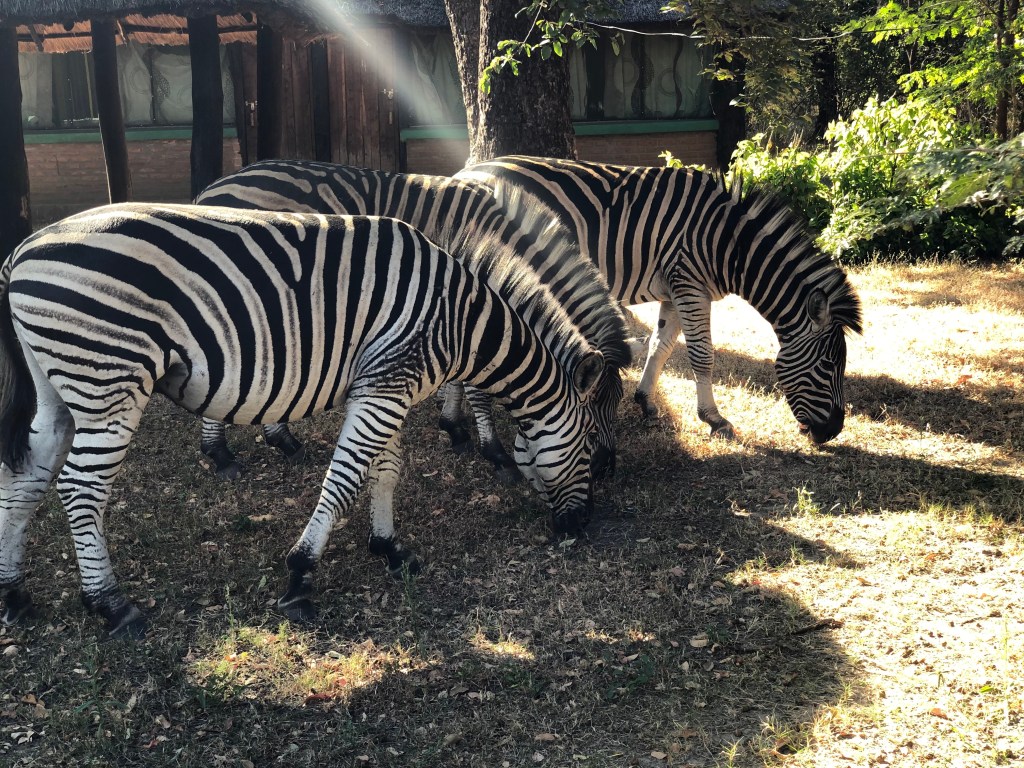
After lunch, we packed up the car and drove the 2 hours to Kuti to spend the night to be ready for the clinic in the morning. Kuti is a relatively small reserve outside of the town of Salima. The reserve is home to baboons, vervet monkeys, waterbuck, zebra, one giraffe, and some other hoof stock species. Lilongwe Wildlife Center and Trust use the reserve for research.
Wednesday 6/9
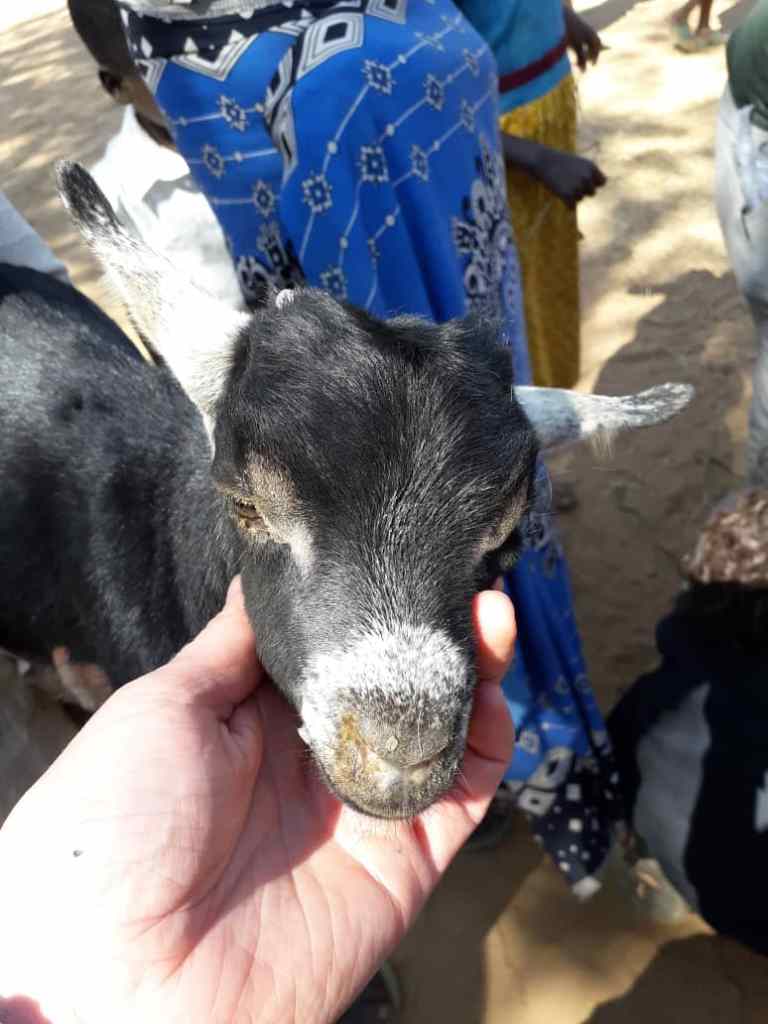
We spent 7 hours at the community clinic treating 50 goats, 20 cattle, and 25 dogs! It was a crazy busy day, but I learned so much and got to perfect some skills. I performed physical exams and collected blood from 75% of the goats. This was a great opportunity to practice thoracic auscultation (listening to the heart and lungs using a stethoscope) and jugular blood draws. By the end of the day, I felt very confident in my skills and I look forward to continuing to practice as we do more clinics throughout my stay. It was also very interesting to see the children come to see what we were doing. They would come in crowds to stand around and watch us draw blood and give injections. They were so interested to see what we were doing. I wish we could have communicated with them to tell them what we were doing and why. I also wanted to give some of the kids an opportunity to use a stethoscope but there were too many and we couldn’t just pick one or two to let do it. Maybe we will have the opportunity to do it at a different village with less children.

Thursday 6/10
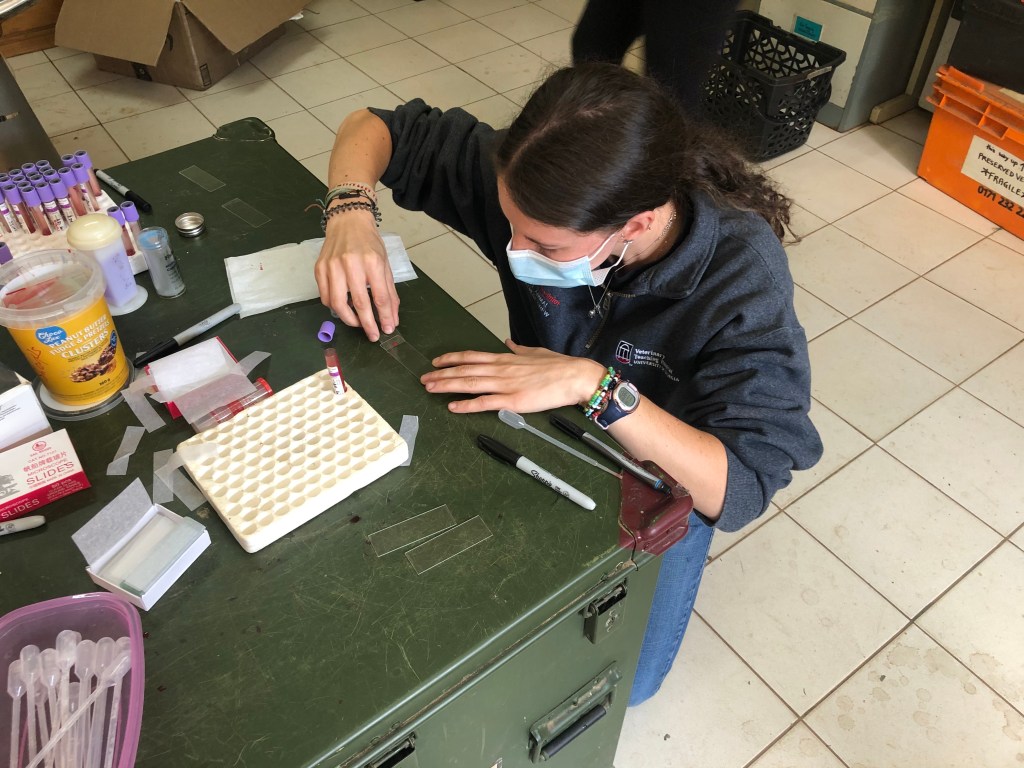
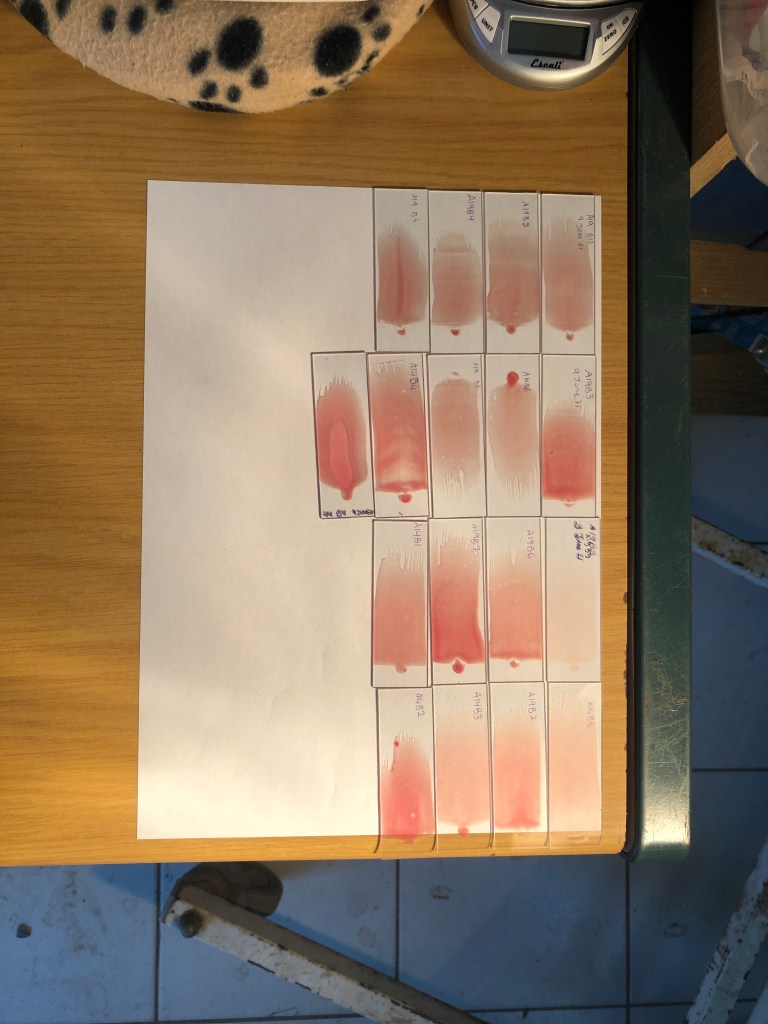
Before we began our work for the day, Charlotte gave us a lecture on parasitology since we would be looking for parasites in the samples from the clinic. The lecture focused on parasites commonly found in primates, but they are almost the same in every species; there is just a specific parasite species for each animal. After the lecture, we had to process all the samples that we collected at the community clinic. In total, we collected 64 blood samples from goats and cattle and 7 fecal samples. For each blood sample, we made a blood smear. Blood smears are used to evaluate the number and character of the red and white blood cells. They can tell you if there is evidence of infection, blood parasites, or anemia. For more information on blood smears, read my next project post that is scheduled to be posted on Tuesday! The blood samples are being used for the tick-borne disease project since many tick-borne diseases are blood parasites. The fecal samples are being evaluated for intestinal parasites. Chris is using this data to compare it to the parasites found in the antelope species found in Kuti.
After lunch, we had a lecture on handling wildlife emergencies in Malawi. This is a really interesting topic because we learn about emergency medicine in school, but it is vastly different in a country like Malawi. For one, they have very limited resources including access to drugs. Many drugs that we would commonly use are not produced in Malawi so they would have to be imported from places like South Africa or Europe and that makes them extremely expensive. Funding is also a huge constraint on how in-depth treatment for emergencies can be here. Each case must be looked at from the viewpoint of whether it can be released and what its ecological impact is on the ecosystem. In addition, advanced diagnostics like MRIs and CT scans are controversial because most Malawians are not able to afford that level of care for themselves so is it ethical to use it for an animal? These are all issues that have to be considered when you are working in a resource limited area.
Friday, Saturday, and Sunday 6/11-6/13
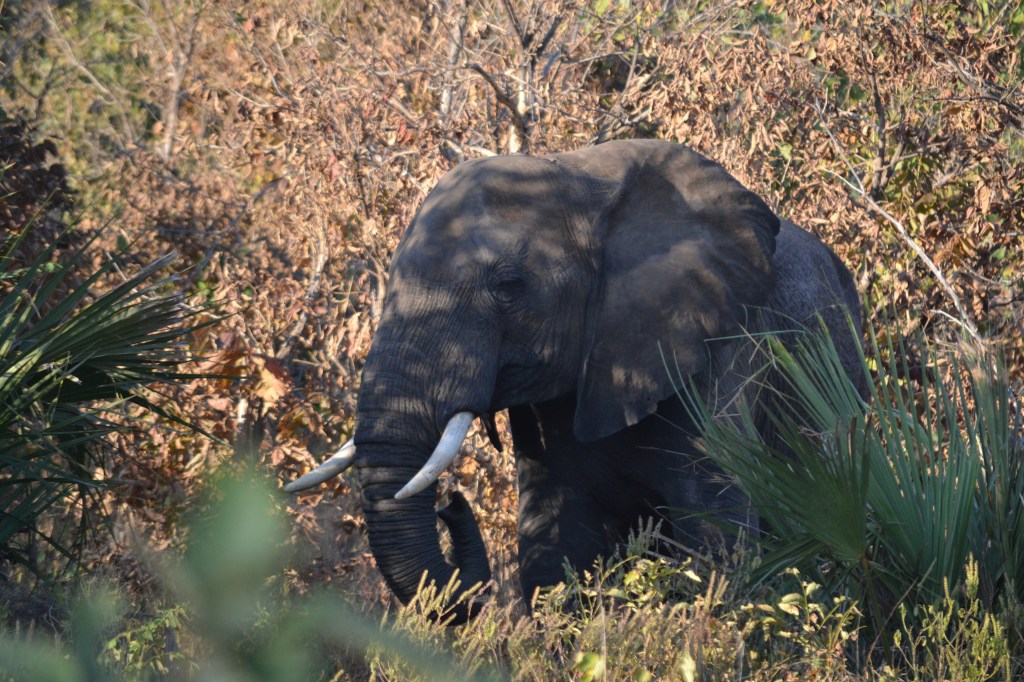
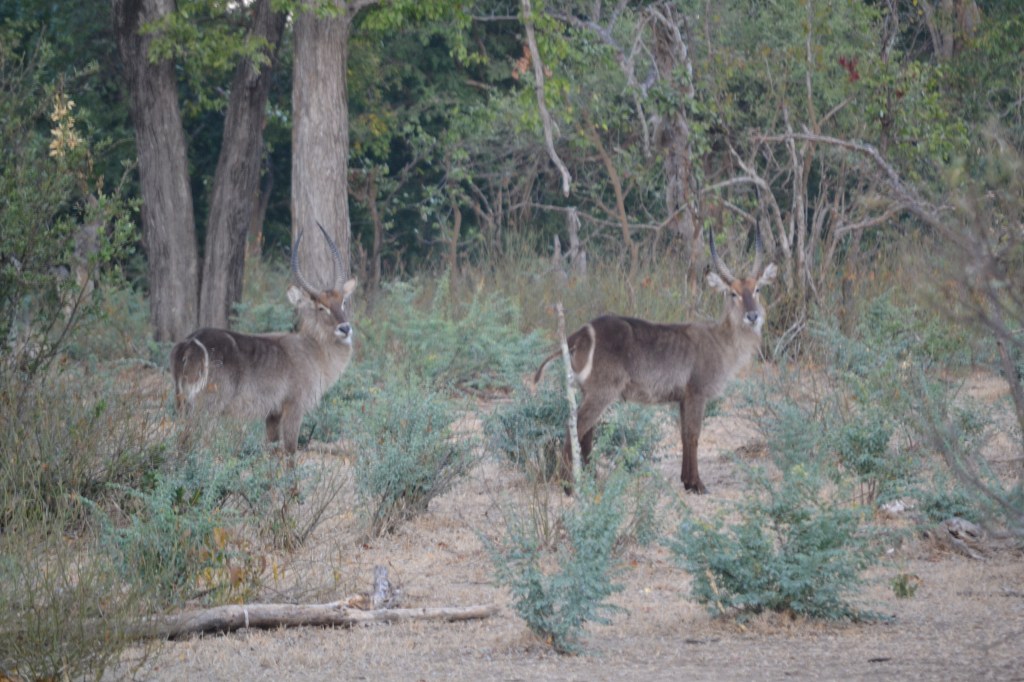
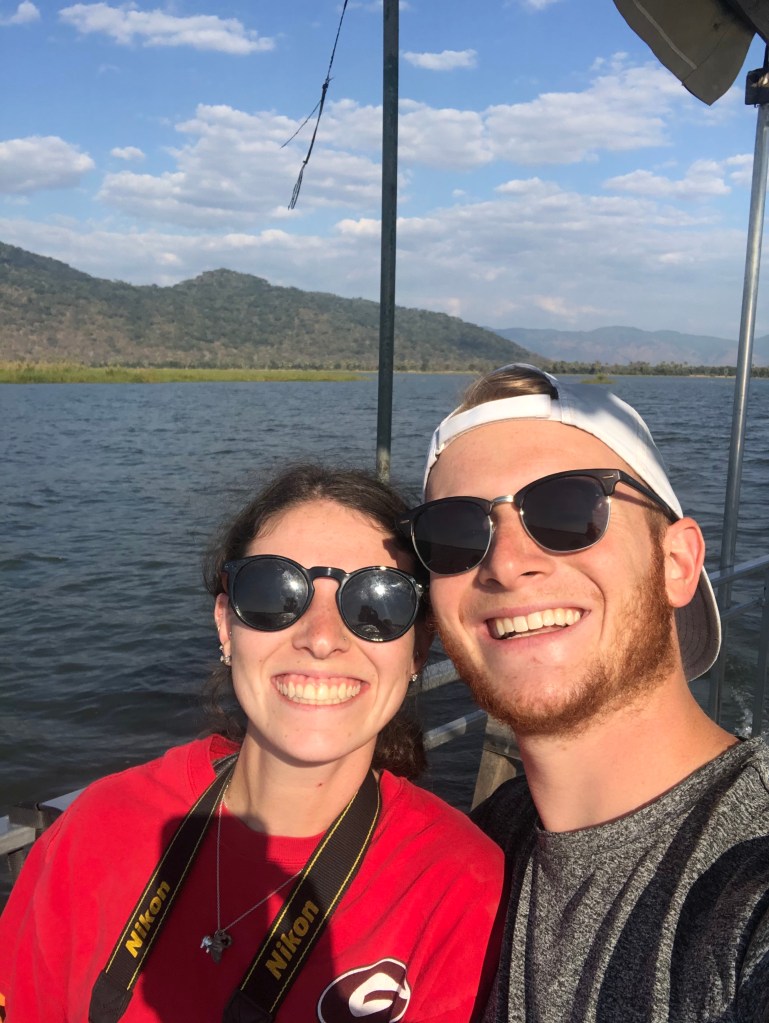
We spent the weekend at Liwonde National Park! Liwonde is probably the most popular of Malawi’s wildlife parks. It is currently run by African Parks, an organization that has taken smaller parks in countries that do not have adequate funding to manage their parks. Liwonde National Park suffered a huge loss of biodiversity due to poaching pressures and lack of oversight. Since African Parks took over, multiple species have been reintroduced to the park and numbers are growing. Lilongwe Wildlife Trust has a research station set up in the park to monitor certain species. While we were there, we stayed at the research camp and got to meet the research coordinator and learn about telemetry. Telemetry is a method of tracking animals using a radio frequency signal transmitted through a collar. This method is used by wildlife agencies and research teams around the world and has been the main method since the 1960’s. We also went on a game drive through the park and saw elephants and a variety of antelope species. In the afternoon, we went on a water safari down the Shire River which flows from Lake Malawi.
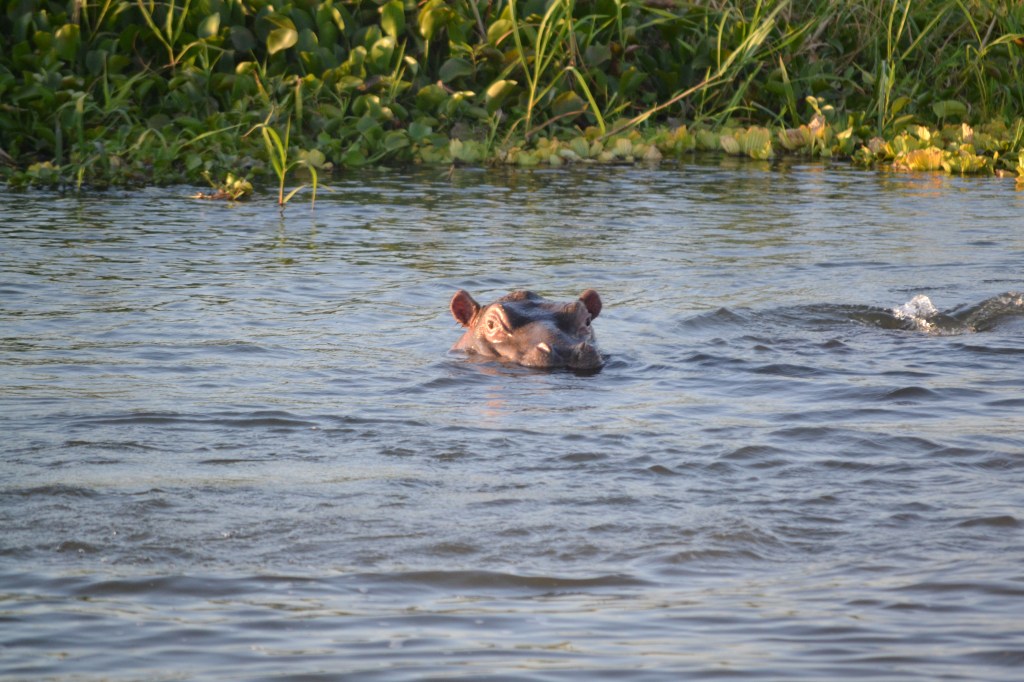
Sunday morning before we left to return to Lilongwe, we got to observe Dr. Salb dart a cheetah and place a VHF collar (the one that is used for telemetry). We assisted with administering fluids and monitoring the cheetah under anesthesia. Although I have done a lot of cheetah work, it is great to see different veterinarians doing it because they all have their own methods and techniques. Each experience is unique and teaches you something new. After we returned to the research camp, we practiced shooting a target with the dart gun. It is really nice when we get to practice using these types of guns because they are CO2 powered so they handle much differently than a normal gun (so I have been told) but actually darting a moving animal would still be incredibly difficult the first time you tried!


Monday 6/14
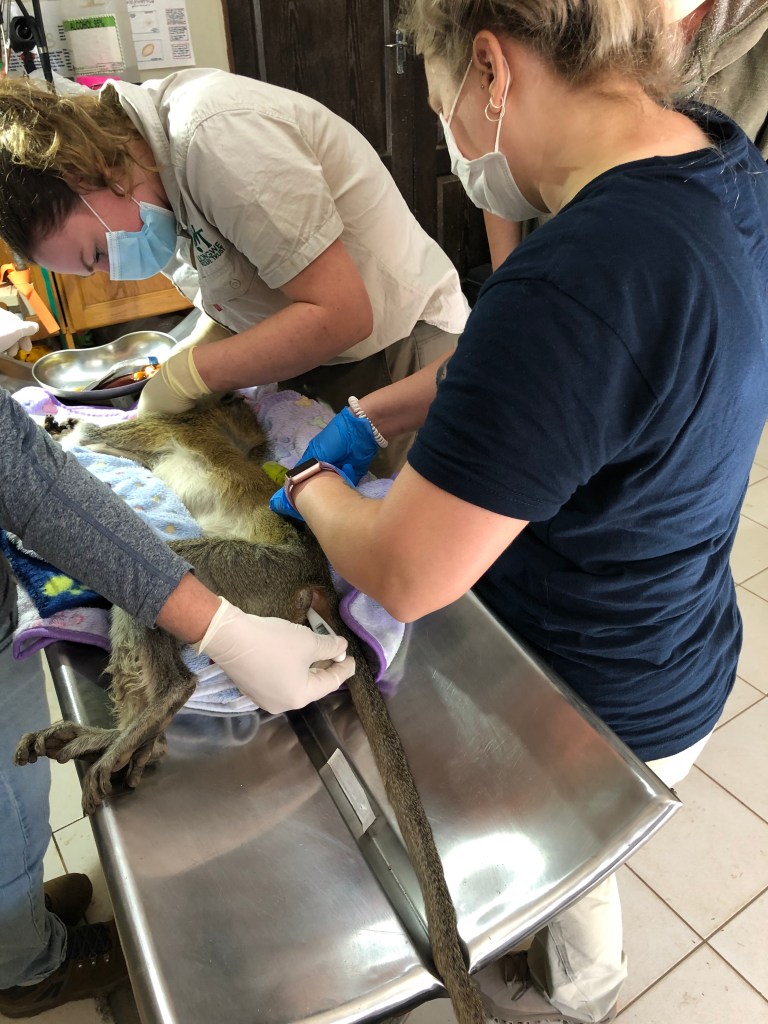
Today was the last day of the Vet Course and it ended up being extremely busy! We started the morning with primate health exams on one of the vervet monkey troops. Our goal was to do 4 exams, but we were only able to catch 2 of them. The first animal we did, Koko, is a very old male vervet that has been at the center for many years. He was in very good health for a geriatric monkey except for his 2 lower incisors that appeared to be fractured and very worn. The pulp cavity (inside of the tooth where the nerves and vessels are) was exposed so Charlotte elected to remove them to decrease his level of discomfort. The second monkey, Dobby, was in perfect health and just received his vaccines and his TB test. All of the animals are anesthetized for exams every 2 years to update their vaccines and perform a TB test unless they present for a different issue before then. We plan to catch and perform exams on the rest of the troop in the coming weeks.

After lunch, we had 2 emergencies come into the center. The first one was an adult Eastern hinge-backed tortoise that was found in someone’s garden. He appeared completely healthy despite being a little thin so he was placed in a box with food and water and will be released tomorrow on the walking trails next to the center. The second emergency was a Barn Owl that came in almost unresponsive. It had been found in a cupboard with a second owl and when the people tried to scare them away, the other one flew away but this one could not. As Charlotte examined it, she noticed a large amount of blood in the mouth and in the feces. The owl also was not opening its eyes which is extremely unusual for an owl and can indicate head trauma. Once the owl was stabilized, we ran a fecal and found protozoal parasites and some blood. We believe that the owl ingested rodenticide poisoning which causes an inability to clot the blood and severe bleeding. The owl was treated with Vitamin K (necessary for several clotting factors) and a medication to kill the protozoal parasites. Rodenticide poisoning is very difficult to treat if too much bleeding has already occurred so we will keep our fingers crossed that it makes it.

Tuesday 6/15
Day off after the long week of work for the Vet Course!
If you made it this far, thank you for reading! I am sorry that I was so delayed in getting this posted and it isn’t even through the current date. I hope to be able to stay on track for the remainder of the externship but wildlife medicine is unpredictable!


 Wandering Wildlife Vet
Leave a comment