
I am again very late on this post and it is again not even through the current date. We have been doing so much during the week which is awesome, but it leaves me very tired at the end of the day. I have been struggling to motivate myself to write during our downtime and at night instead of doing nothing. I really enjoy writing my posts and sharing my experience but for some reason, it feels like school and I didn’t want to do school during this externship. I am working on separating the two so that I can find pleasure in writing them. It is very different from when I posted during my gap year because I didn’t have school to think about and I was very in the moment during my trip. I find myself dwelling on the school year to come and things that I could be doing for school. The only way I have found so far to not let that effect my time here is to take free time away from my computer which means I do not write as much. However, I have read 2 books since we have been here which is more than I have read since starting vet school almost 2 years ago. I love reading but it is hard during the school year when we spend all day and night reading lecture material and studying. This is my opportunity to take that time to read again. So, bear with me through the rest of my externship. I promise I will post about everything we have done but I might not stick to a time schedule and they might be more sporadic.
Wednesday 6/16
We had the day off again because we are leaving tomorrow to return to Kuti for another day of community clinics.
Thursday 6/17
While administering the medications to the cases that we have been treating since arriving, we noticed that a few of the vervet monkeys in one of the troops had injuries. After we finished, we joined Charlotte to observe them and determine if we needed to provide treatment to the animals. Grace, a female vervet, was the first animal that we found. It appeared that she had gotten in a fight with another vervet and had a wound on her side and her tail. The wound on her side was not actively bleeding and appeared to be almost healed. Her tail had fresh blood on it, but the wound appeared to be superficial and not causing her any discomfort. We decided to continue to observe it but not to intervene at that time. Alvin, another vervet in the same troop, was limping on his right hind leg. We had attempted to catch him earlier in the week when we were doing annual exams on his troop, but he was stubborn and would not come into the cage. We were planning on continuing to do exams on this troop throughout the next week or two so hopefully, he will come in and we can make sure his leg is alright. Before lunch, we provided treatment to Pizza, the barn owl that presented for rodenticide poisoning. He is doing much better and is more alert and active! These are great signs considering how critical he was when he came in. He is still receiving Vitamin K supplementation in case there is continued bleeding. Vitamin K treatment takes daily administration for 6-8 weeks. Pizza is not yet eating on his own, so we are feeding him by hand 3 times a day. He is passing normal stool and urates (bird equivalent of urine) which are also good signs! We hope to see continued improvement while he is with us for at least 6 weeks. After lunch, we packed up and headed off to Kuti Wildlife Reserve for a community clinic.

Friday 6/18
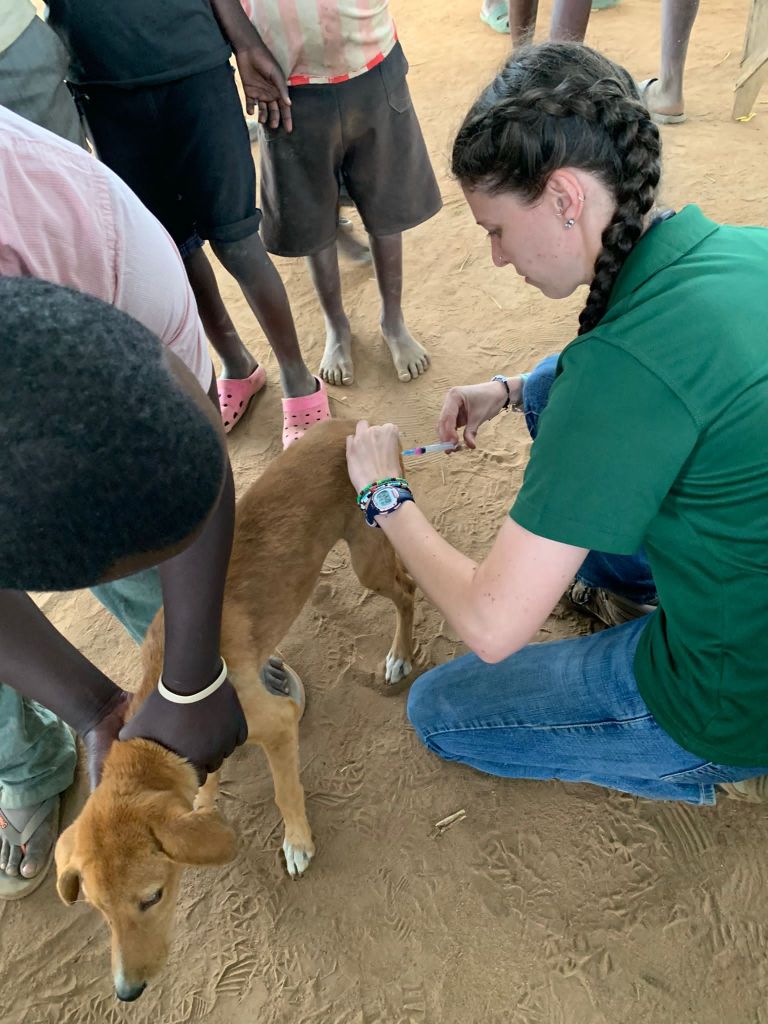
Community clinic #2! We were much more prepared for this clinic and knew what to expect. We vaccinated over 40 dogs for rabies, treated 50 goats, and 15 cattle. It is very interesting to see the difference in need between each community. This community was obviously more concerned about rabies and dog bites because of the sheer number of dogs we saw. We ran out of rabies vaccine within the first few hours and had to turn people away. Ten days without drawing blood on a goat meant that we all were a little rusty. At the beginning, we were struggling to hit the vein and needed assistance from Charlotte and Amanda (Dr. Salb). By the end of the day, we were all back on our game and flying through the treatments. Practice makes perfect and we will continue to improve as we do more of these clinics.

Saturday 6/19
Our plan for this morning was to locate and dart a male sable to remove a tracking collar. If you have been reading since the beginning, you know that sable were responsible for the only real injury I have gotten while working with wildlife. Despite this, I absolutely love sable! They are amazing antelope and so beautiful. I was really looking forward to working with one again and getting to see them during this trip. Unfortunately, we spent about 5 hours trying to get close enough to dart him. We knew exactly where he was but there was almost no access by car, and he was in dense bush. We plan to try again another day when we can hopefully get him in a better location.
Sunday 6/20
We had the day off to run some errands and catch up on sleep. We usually spend our days off going into town to buy snacks or going to the market to get things to bring home.
Monday 6/21
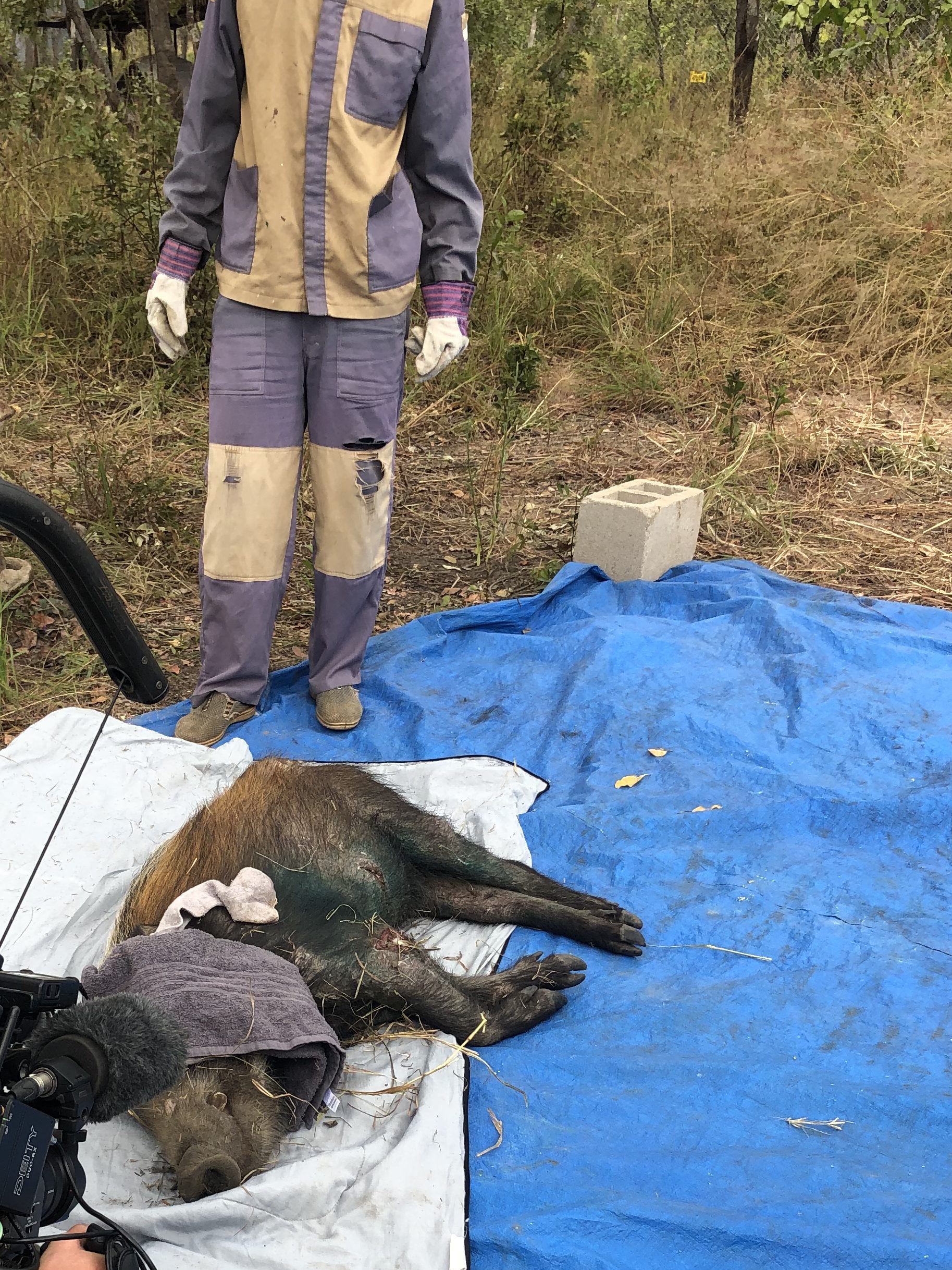
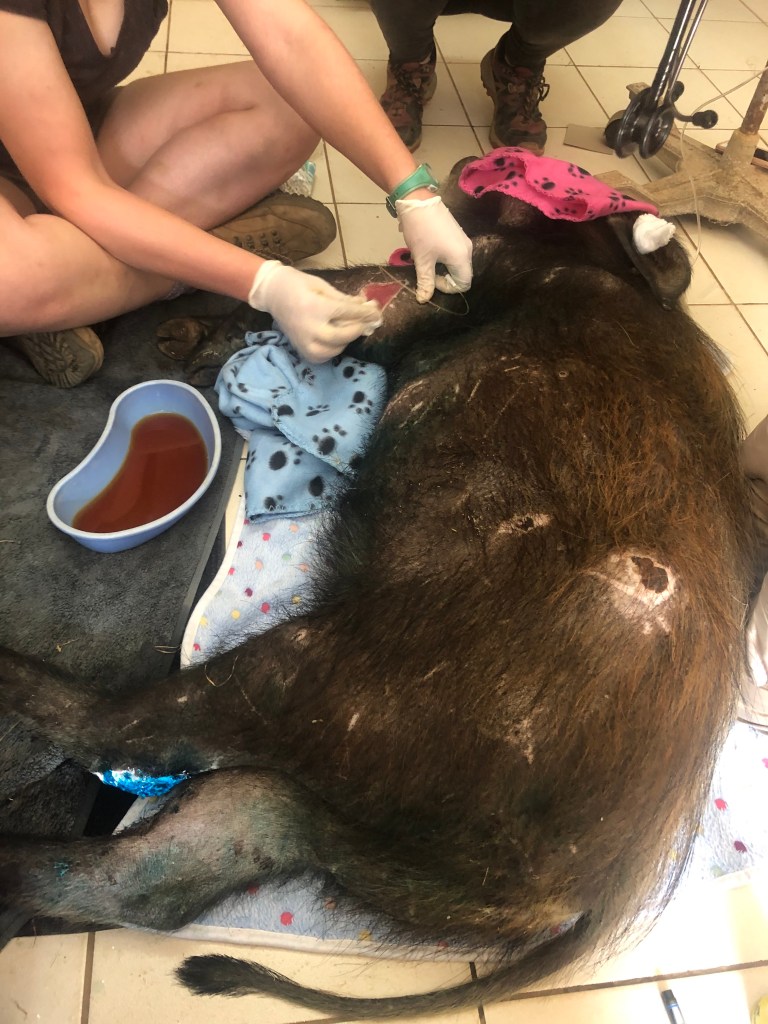
This morning we went to Kasungu National Park to treat a bush pig. Inside the national park is the office for an animal welfare group. This group found this pig injured about a week ago. They believed that she had been attacked by dogs and hit with a spear. She was limping and unable to keep up with her group. They were able to bring her into a small, covered area with bedding and food until we arrived. Once she was anesthetized, we cleaned the wounds with iodine and removed as much infection as possible. She had about 10 wounds over her body. Most of them were beginning to heal very well but 2 had signs of significant infection. One wound, on her rib cage, was believed to have been from a spear and had broken the rib underneath. The other wound was on her left forelimb at the elbow. This wound was extremely swollen, hot, and hard. We drained as much of the puss out of it as possible and cleaned as deep as we could get. When bacteria create infections in wounds like these, they create tracts through the tissue to migrate through. The tracts on this wound went down most of the leg. This makes treatment much more difficult. We treated her with antibiotics and took a culture of the puss to make sure that the bacteria causing the infection would be affected by the antibiotics we were given. The plan was to transport her back to the center because she would need wound cleaning at least 3 times a week. However, our transport box was a little too small for her so Charlotte will go back on Wednesday with a different box to bring her back to the center for further treatment.
Tuesday 6/22
We had the day off because Chris and I needed to go to immigration to renew our visas! Upon arrival, immigration gives you a 30-day tourist visa. After that 30 days, you can go back to the office and extend for up to an additional 60 days. The borders are closed again to any tourists so we were a little worried that they wouldn’t give us the extension but there were no issues, and they were happy to have us stay.
Wednesday 6/23
Today we were on animal care duty since Charlotte was back at Kasungu transporting the bushpig to the clinic. Animal care duties involve giving the morning medications to the chronic cases and any new patients. Since we began here, we have started giving medication to 3 additional animals. Potato, a young male yellow baboon was injured playing with his enclosure mate. If you have been reading my educational posts for my project, you would see Potato’s story. He is currently living with another young yellow baboon named Polly. Young baboons are just like toddlers and they play constantly and can be quite rough with each other. Potato is favoring one of his front limbs, so he is on an anti-inflammatory to help the injury and provide some pain relief. The other two animals are Blueberry and Ivy. Blueberry is a juvenile yellow baboon who was brought in from the pet trade by a good Samaritan who had rescued her. Ivy is a resident baboon that is unreleasable due to her human habituation but is a wonderful foster mom. The two were introduced to provide Blueberry the necessary social interaction and teach her how to be a normal baboon. Blueberry’s history commonly causes these animals to be malnourished. This was evident in Blueberry’s case as a poor coat quality. To treat this and help to compensate for the lack of nutrients, we are providing her with a multivitamin. Primates get jealous very easily, so to keep the peace between her and Ivy, we are given Ivy vitamins as well in the same treat that Blueberry gets hers every day.
After lunch, we met with Kondwani who oversees the integrations at the center. He had been in one of the reserves helping with rehabilitation of another animal for the beginning of our time at the center, so we hadn’t had the opportunity to meet him or work with him. Integrations are a huge part of the process here at the center. As I discussed in Potato’s case report, to release primates, they have to be in a troop. Whenever a new individual comes into the center, they have to decide which troop in can join when it is ready. Part of this process involves watching the animals interact daily to make sure that it is going well. Potato is currently going through the integration process with Polly. Polly was removed from her troop to meet Potato so that when he is integrated into the whole troop, he will have an ally. We observed Potato and Polly’s interactions for an hour. In that time, we noticed that Polly had become uninterested with Potato and was no longer playing with him like she had before. Due to this, Potato was becoming very bored. This meant it was time to put Polly back with the troop and bring in another member to meet Potato. Another young male should provide more stimulation and willingness to play.

Thursday 6/24
After giving out the morning medications, we were on enrichment. Today we were focusing on the parrots. We went out into the reserve and found some fresh grass. We took this grass back to the center and created grass balls. These are metal balls that we stuff full of grass and some peanuts. The parrots have to rip the grass out to get to the peanuts which they love. After we were finished with them, we watched as the parrots destroyed them to get to the peanuts. They are incredibly intelligent animals, and it is amazing to see them strategize and process how to get to the peanuts in the fastest way possible.
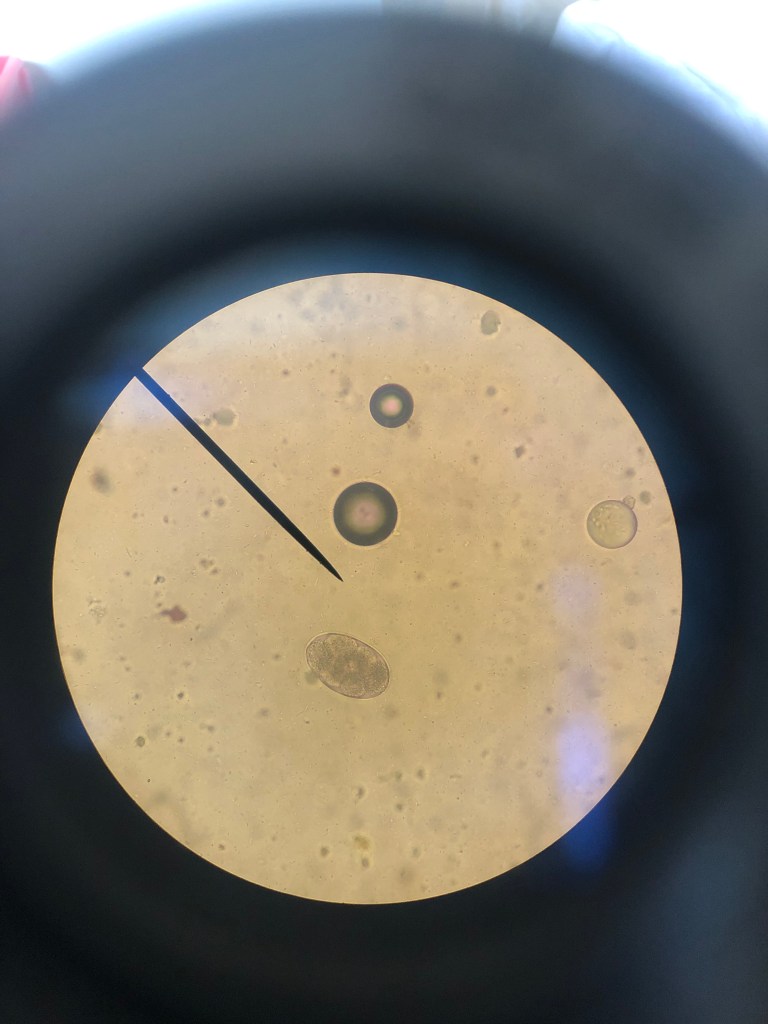
Before leaving for Kuti, Chris and I processed the fecal samples he had collected from the last community clinic. These samples are mostly from the cattle that we treat. The goal of collecting these samples is to identify which intestinal parasites are most common in the livestock around the reserve. He will then collect wildlife samples from inside Kuti to compare which species are present in each group since some of the livestock graze in the park and encounter the wildlife. We use a method called passive fecal floats where the feces are put into a salt solution which causing the parasite eggs to float to the top of a test tube. On the top of the test tube is a microscope cover slip. As the eggs float to the top, they stick to the cover slip. After about 20 minutes, you place the cover slip on a microscope slide and observe the contents under the microscope.

Friday 6/25
Community clinic #3! We were down a few hands this time. It was only Chris, myself, Charlotte, Carlotta (another extern), and Auze (veterinary technician that works at the center). We were nervous that it was going to be overwhelming with less hands because we normally split into two teams to tackle the different animals. Since this was our third clinic, we were prepared though. We were a well-oiled machine. Everyone was getting their jugular sticks on the first or second try. We have all gotten much better at our skills which means that Charlotte is needed at every single animal anymore. We haven’t counted all the samples, but we think we did at least 70 goats, 25 cattle, and 30 dogs. We have two more clinics in a few weeks.
I think it is important to have these opportunities with the community. It is easy to come to a country to volunteer and remain in your bubble. Going out into the community allows us to really see how Malawians live. It also gives us the opportunity to interact with another culture that is just as interested in us as we are in them. The language barrier is an issue, but the people are very appreciative when you use whatever Chichewa you can to speak to them. On the medical side, I think it is important for all veterinarians to get out in their communities at some point. In the same way, it is easy for veterinarians to stay in their bubble of the clinic and not see what is happening outside of the doors. For wildlife and zoo vets, it is easy to get stuck on the diversity of species that you work with or forget the basic technical skills that you don’t use every day. Opportunities like these get you back out and practicing those skills so that you don’t lose them completely.
Saturday 6/26
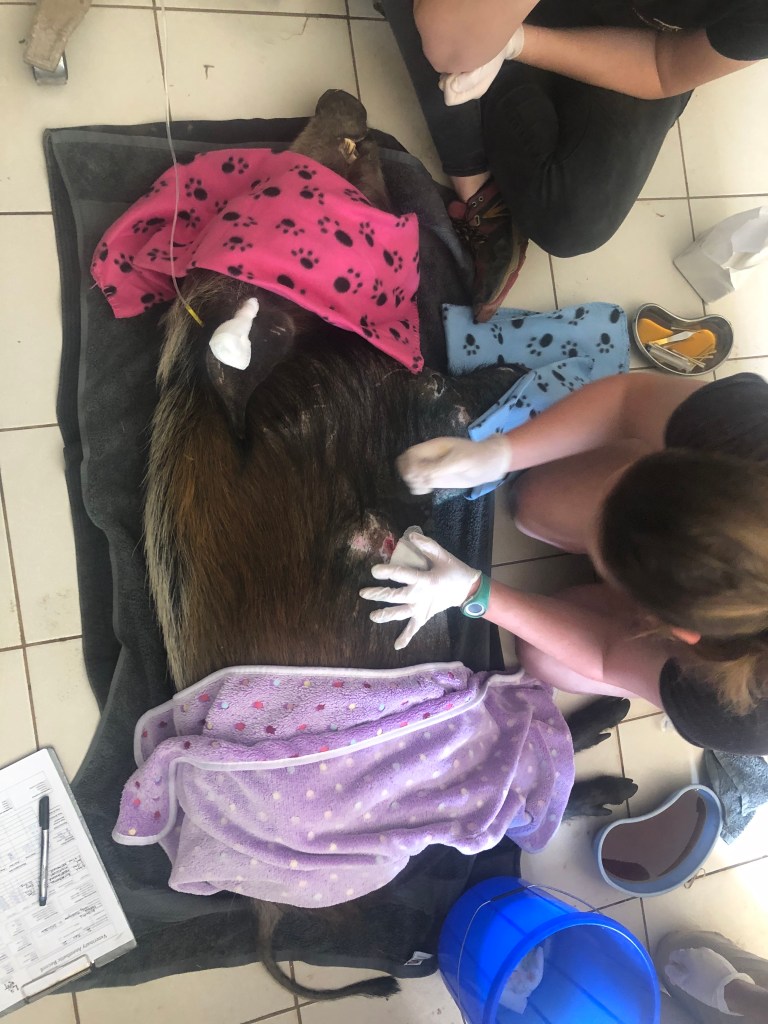
This morning we anesthetized the bushpig again. She had time to adjust to her new home and was eating well. Our goal was to clean the wounds again and administer antibiotics. The culture results from the first time we were there had come back and the antibiotics we had chosen would be effective against the bacteria in the infected wounds. The wounds are continuing to heal but the infection in the forelimb was still significant. The goal is to X-ray the limb as soon as possible to see how extensive the damage is from the infection.
Once the pig was awake and moving around, we went to The Woodlands. The hotel was hosting a farmer’s and craft market for the morning. This market was a regular thing before the pandemic but hadn’t been able to occur in over a year. They had local artists, food vendors, and live music. We bought some food and souvenirs and had a wonderful lunch before heading back to the center.
Sunday 6/27
Charlotte is usually off on Saturdays and Sundays. Since we had clinic work to do yesterday, we were on animal care for the day. We administered the medications and feed all the resident animals. We have done this many times now, so we are very fast at it. These days give us a lot of free time to relax in between tasks.
Monday 6/28
I started my morning by giving Frankie and Biscuit their bottles. In the month that we have been here, I have seen both grow. Frankie is becoming an adult slowly before our eyes. She will soon be ready to integrate into a troop where she will have the opportunity to be a true baboon. After their bottles, I fed Pizza. He is doing amazingly well. He is starting to walk around (strange for an owl to do but still a good sign), perching better, and regaining his balance. We moved him into a bigger room where he has branches and perches. He still is not eating on his own, but we hope that will come with time.
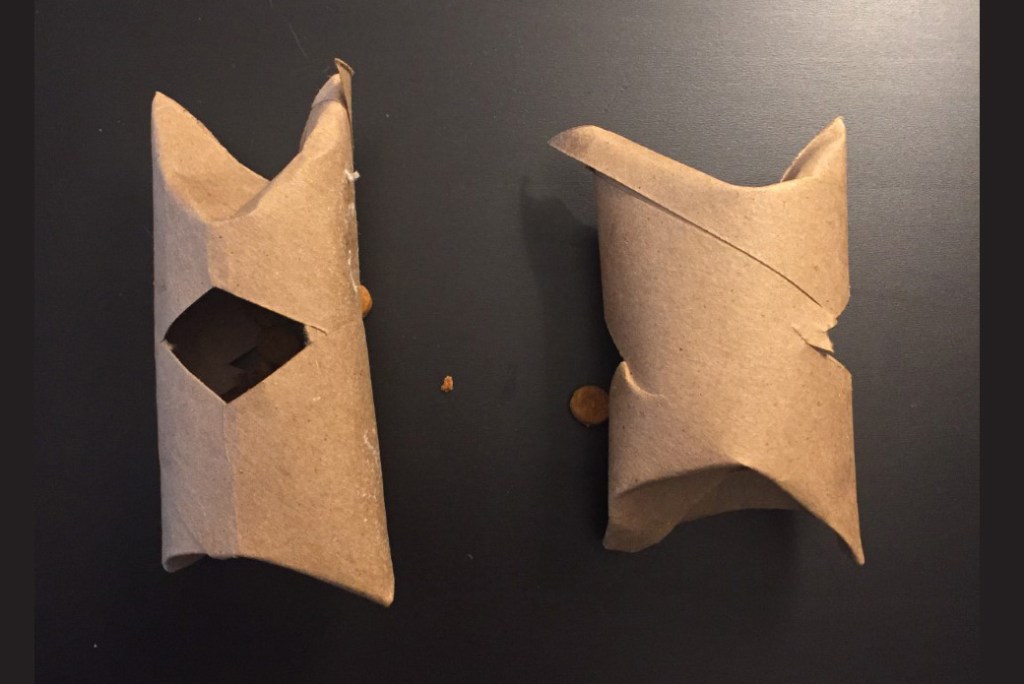
For the afternoon, I was on enrichment with Gideon. Today we made toilet paper rolls for the vervet monkeys. These are toilet paper rolls filled with treats and folded in at both ends. The goal is to see the monkeys unfold the roll to get to the treats. Some of them will just rip the rolls apart but you hope to see the puzzle solving.
Tuesday 6/29
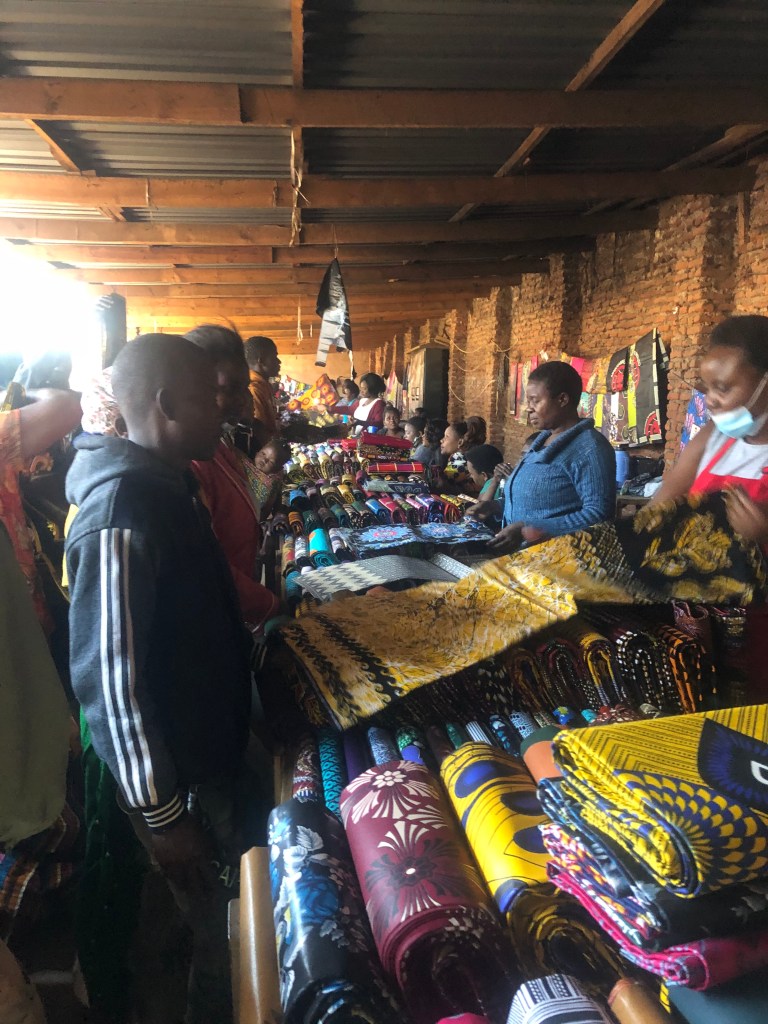
We had the day off to run errands. We won’t have a day off for about 10 days as we finish up our last few weeks here. We went to the Chitenge Market. Chitenge is the fabric worn by most of the people in Eastern Africa. The fabric usually has a lot of color and patterns. The market is beautiful to walk into and see lines of the fabric. We bought some fabric to have made into custom clothing before we leave.
Wednesday 6/30
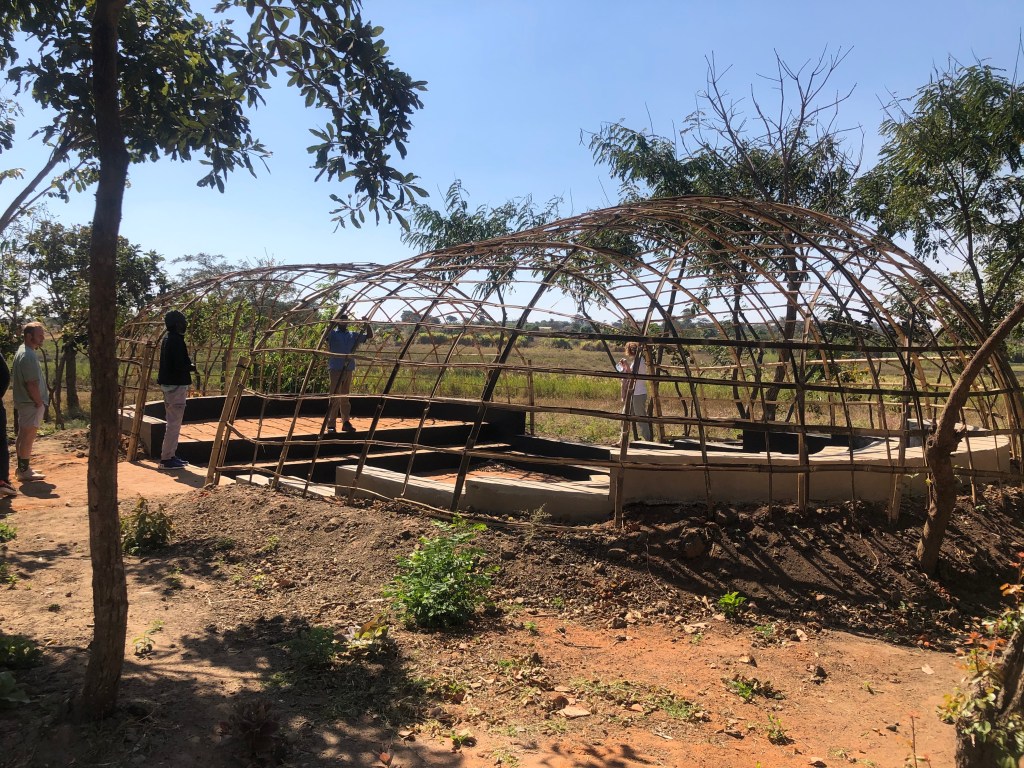
After morning medications, we went with Clement from the education team and Elaine from public relations to a village about 45 minutes outside of Lilongwe. The education team is working on revamping their program and further extend the communities that they reach. The village we went to is called Chingalire. The leader of this village is Ben Michael Mankhamba. He is a famous Malawian musician who produces traditional Malawian music. After travelling for music, he decided he wanted to return to his home community to give back. With the money he made as a musician, he has created an “eductainment” center for his village and the surrounding communities. This area has a stage, library, nursery school, campground, and a park. He also has replanted over 1000 native trees. He hosts events and workshops for people in the surrounding communities to provide education that most people would normally not have access to. He also worked with the Department of Health and brings in doctors when he hosts these events to provide medical care to people who normally can’t get to a doctor. On the flip side, he hosts entertainment events like dancing, open mic nights, and art exhibits. His goal is to bridge the gap between traditional Malawian culture and the modern world by showing the value in the traditions while helping people to progress forward. It was amazing to see the things that he was able to accomplish with limited resources. His community was willing to help though, and you could see the respect they have for him and what he is doing.

My goal is to do 2 more posts before leaving Malawi and 1 post while we are in Zimbabwe. It is possible that it will turn out to only be 1 Malawi post and 1 Zimbabwe post. I have 4 more posts planned related to my project so stay tuned for those. I hope you are enjoying following my externship!
 Wandering Wildlife Vet
Leave a comment